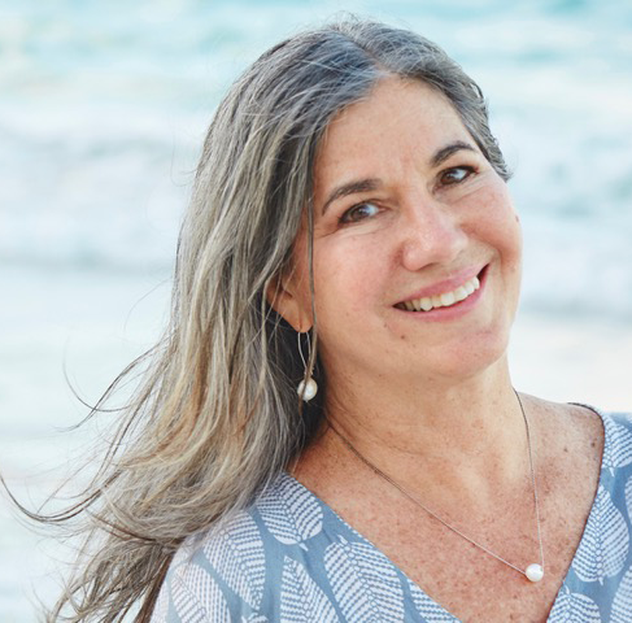
Dr. Anita Johnston:
Our worth is not to be evaluated in terms of what we've accomplished, how much we've done, how much money we have, what size body we have, all of that. Our worth is a given. We are born with it. It's our birthright.
Ellie Pike:
When people talk about eating disorders, the conversation often stays on the surface; food, weight, appearance, behaviors. But what if those symptoms are actually speaking a deeper language, a symbolic language, a language of metaphor? Today on Mental Note Podcast, I'm joined by the singular Dr. Anita Johnston.
Dr. Anita Johnston:
I'm Dr. Anita Johnston. I'm a depth psychologist, and author of Eating in the Light of the Moon, which has been published in seven languages. I'm the founder and executive clinical director of 'Ai Pono Hawaii, which has a residential treatment center on the island of Maui. And I'm the co-founder of the Light of the Moon Cafe, which is my online platform that offers support and courses for women struggling with disordered eating all over the world.
Ellie Pike:
In our conversation, we explore why eating disorders often develop in emotionally sensitive, intuitive people. How modern culture pushes us toward perfectionism, comparison, and disconnection from ourselves. And why healing may have less to do with control and more to do with reconnecting to authenticity. So settle in. This is a conversation you can return to again and again, gleaning something new each time. You're listening to Mental Note Podcast. I'm Ellie Pike.
Well, I'm so glad that we get to do this episode. I know I have certainly referenced your book many times, and lots of folks have really found a lot of hope and meaning in your words. And so I'm really looking forward to this interview. Thank you.
Dr. Anita Johnston:
I'm happy to be here.
Ellie Pike:
Dr. Johnston, you've spoken about growing up in Guam, where wisdom is often passed down through story. How has that cultural foundation shaped your approach to healing?
Dr. Anita Johnston:
Actually, I think it's been huge in a lot of different ways. But because I grew up in a multi-ethnic household where there were a lot of different cultures that came into the mix, and I'm also from an indigenous culture, the Chamorro on Guam, which is matrilineal, I was always interested in the differences between how people perceived things or experienced things, particularly with regard to women coming from a matrilineal culture.
And so I think that, at a very early age, I just became very curious about, well, why this and why not that? And so I think that was really the beginning of my getting involved with disordered eating because I was interested in women's issues. And back then it was mostly girls and women that were struggling with eating and body image. That's changed, but in the beginning, that was more the case.
Ellie Pike:
Or at least the ones that were being studied, right? The research was also really limited. So we were under the impression that it was so many girls and women. Well, I'm really looking forward to hearing how your perspective comes into play. And one thing that I wanted to touch base on is, you've talked about how our defenses often live in the more analytical left side of the brain. So how does engaging in the right brain, through metaphor and imagery, help people see their experiences differently?
Dr. Anita Johnston:
Yeah. So what we now know with neuroscience, back in the day, we didn't know that. And all I could see was that when I used story and metaphor, the lights, I would call it the lights going off in someone's eyes. I could see a spark. I could see when it resonated. Well, what we know now, because they can measure the brain, is what happens when we get one of those insights, those aha moments.
There's a part of our brain called the anterior superior temporal gyrus. It's a fold right over our right ear and it sends out a blast of gamma waves, which are the highest electrical frequency in the brain and known to create new neural pathways.
And so going in through the right side of our brain, which has the capacity to perceive connections between things that don't appear to be related, that help us see the bigger picture so we see the entire forest, not just the trees, that's the part that is more receptive to new perspectives.
And often, for someone struggling with disordered eating, the left side of their brain, which loves to count and measure how many calories and how far did I run, and all of that, it can't see this bigger picture. It can't get this bigger perspective to see, well, what's driving these thoughts? What's driving these behaviors in the first place?
So when you use story and metaphor, you're going into the right side of the brain that understands context, that doesn't just focus and get fixed on certain details.
Ellie Pike:
So to summarize, that left side of the brain is that detail oriented. It's like the trees, it's the leaves, it's the bark, it's like the nitty-gritty. And then that right side of the brain, when we allow imagery and metaphor to come in, it is allowing our perspective to expand and maybe see that forest versus the details.
Dr. Anita Johnston:
Correct.
Ellie Pike:
And I need this advice in my life all the time. We all do, whether we struggle with mental illness or eating disorders, it's all about creating perspective. And it shifts our perception of what life can look like.
Dr. Anita Johnston:
And part of the problem is, culturally, because you see, what has happened over the last hundred or so years is that as a culture, we have become more left brain. And so it's no wonder we have issues with eating disorders and obsessive compulsive behaviors, is because that part of the brain has been overdeveloped just through the evolution of our culture.
And so shifting over and trying to get back into balance, because we need that side of our brain, it's not like... It doesn't have a job to do, but it's trying to do something that's not its job.
Ellie Pike:
So you say the left side is doing something that is not its job. So what is the left side of the brain's job?
Dr. Anita Johnston:
Well, because the left side of our brain can really focus on details, it's where our critical faculties come into play. We use the left side of our brain to help us get clear and discern certain things. It's where the inner critic hangs out. So we need that. When I'm writing, it's the left side of my brain that says, "Anita, that's a dangling participle. You can't use that," because it'll zero right in.
The problem is, we try to use the left side of our brain for something that is not its business, which is our worth. Our worth is not to be evaluated in terms of what we've accomplished, how much we've done, how much money we have, what size body we have, all of that. It's not staying in its lane. It's not its job. Our worth is a given. We are born with it. It's our birthright.
Ellie Pike:
I appreciate you saying shifting into the balance. And I know for me that has to be sometimes a really conscious choice, or sometimes it's about being present and hearing what others have to say or something that's happening in this life. And one of the ways you share that, the balance piece and activating that right side of the brain, is through metaphor.
So before jumping into that conversation a little bit more, how would you explain what a metaphor really is and why it has a transformational quality that goes beyond that logic or explanation?
Dr. Anita Johnston:
Well, the word itself, metaphor, means to cross over. So it takes you from one place to another. And it's not just poets that use metaphor. We use it all the time when we're trying to explain something that is difficult to understand. So we take something that is familiar to help us understand something that is not familiar. And often we use it to explain things that are invisible, like our emotions or intuitions or things, like I said, that are difficult to understand.
And so I think with disordered eating, metaphor is useful because you're dealing with a lot of complexity. You're dealing with a lot of paradox in the sense that eating disorders are about food and they're not about food at the same time. And so when you can start to use metaphor, what happens, and this is according to Carl Jung, the reason why it affects the psyche at a deep level is that it affects us on multiple levels all at the same time.
So there's the mental level where we go, "Oh, I think I understand that." Then there's the emotional level where a lot of metaphors sometimes are funny or sometimes they're horrific. Sometimes you go, "Ooh, yuck." But there's an emotional component. And then there's the imaginative level. And according to Carl Jung, this is where the transforming power of metaphor resides, in your capacity to use one thing to imagine another. But he says all of these happen at the same time. And because of that, you're able to reach the psyche at a much deeper, much more comprehensive level.
Ellie Pike:
So can you share one of your most beloved metaphors of the log?
Dr. Anita Johnston:
So imagine you're on the banks of a raging river. It's pouring down rain. You slip, you fall in, you're drowning. You're getting pulled down through the rapids. And along comes a big log and you grab on. And that log saves your life. It keeps you from being pulled down under the currents. And eventually it carries you to a place in the river where the water is calm. And you see on the riverbank is where you're wanting to get to. But you can't because when you're holding onto the log so tightly, you can't swim to shore. So now the irony is the very thing that just saved your life is getting in the way of you going where you want to go in life.
But it gets a little more complicated because there's always someone on that riverbank yelling, "Let go of the log, let go of the log." And you feel like an absolute idiot because you can't let go of the log. Well, the way I see it is letting go of that log may not be the very first thing to do initially because what happens if you let go of that log, because that's the top eating disorder specialist or that's someone who loves you more than life itself, and you start to swim to shore, get halfway there and realize, "Oh, I don't have the strength to make it." Well, that means you don't have the strength and confidence to make it back to the log either. And you're really sunk.
So I believe that we have a wise part of ourselves that will not, will not let us let go of anything until we're good and ready. So what do you do instead? Well, let go of that log and try floating. And as soon as you start to sink, grab back on. And then let go of the log and swim around it and grab back on. Let go of the log, practice treading water. And when you get tired, grab back on. And maybe you swim around the log once, twice, 10 times, a hundred times. Whatever it takes for you to have the strength and confidence to make it to shore. Then you let go of the log.
And so I use this metaphor. And notice, I said nothing about eating disorders. However, I am talking about what it feels like. That's the emotion that's embedded in it. It feels like you are drowning, like you're getting pulled down by currents and you have no control. And so guess what? Something comes along and you grab on. So I think part of it is understanding that there's usually a reason, a good reason actually, for having the disordered eating thoughts or behaviors. The problem is it's getting in the way of you getting where you want to go in life.
And just stopping the behaviors is not going to do it because you don't have the strength. You don't have the skillset. And so it's then introducing the idea that there are skills you need to learn. Insight is wonderful. I love insight. Makes me happy. However, there are skills a person needs to learn and those skills take a little bit of time. So I think I like to use this metaphor as a way of helping someone understand not just what's going on with them, but what the recovery process looks like.
Ellie Pike:
I love that metaphor as well. And as you were sharing, I had a million scenarios that came to my mind of people's stories and lived experiences of why that log exists in the first place. And it sticks out to me that you said there's a good reason that that log is there. And I would like to pause there for a second and just have you share a little bit about what you've noticed over your time working with patients, the purpose of the eating disorder. What are some of those good reasons it's there? And then secondarily, when do they know that they have the skills to let go of the log?
Dr. Anita Johnston:
Well, in my experience, what I've discovered is that people who struggle with disordered eating are typically very emotionally sensitive and highly intuitive, but they don't want to be because we don't live in a world that teaches you how to get through life with that level of sensitivity. And so it's sort of like if someone hands you a sword and you grab it by the blade end, you're going to go, "Ah, I don't want this." Until someone says, "No, no, no, no. Look, you can grab it by the handle and then you can cut loose of things that you don't want to be connected to, or you can cut through obstacles that you're encountering."
And so it's a gift, I believe, to be emotionally sensitive and highly intuitive. And by the way, I believe that people who struggle with disordered eating, and get on the recovery journey, are the people the world has been waiting for because what comes with it is a tremendous amount of compassion and empathy. So I do believe it's a gift, but we don't live in a world that teaches us how to work with that level of sensitivity. Typically, we're told that we're too sensitive, that we're overreacting, that we just need to get over it. And so what happens is then you start to believe there's something wrong with me.
And so now you need something that will diminish this capacity to perceive subtle realities that maybe other people can't. Because what we all want more than anything else in the world is a sense of belonging. But then we confuse it with fitting in. And we start to believe we have to look like and act like and think like how we imagine others want us to look and act and feel. And so here's where the disordered eating comes in because then that becomes our focus. And it becomes, this is the reason for the disordered eating, is to try to get you to be the way you imagine others want you to be because you think then you'll be accepted.
Unfortunately, it doesn't really work because fitting in is not the same as belonging. And so that's why you have to do it more and more often because it doesn't work, ultimately.
Ellie Pike:
How do people get into an eating disorder in the first place?
Dr. Anita Johnston:
I think that's an important question because in order to answer that, we have to zoom way out. So we're going to go big, big, big, big picture for this, and start with the idea that we're mammals. That's how far out we're going. And because we're mammals, we have a very strong drive for attachment and connection. We're not turtles. We're not lizards. We don't just hatch out of an egg and go on our way. We have to attach and connect with our caregivers in order to get fed and taken care of throughout our entire childhood.
However, we are also human mammals. And that means we are born with another equally powerful drive. And that's the drive for authenticity. That's the drive to be who we are meant to be in this life, to go where we're meant to go, to live our own unique destiny. But what happens for all of us, and some more to one degree or another, in childhood, these two drives come into conflict. And guess which one wins? Attachment. It has to because our survival depends on that.
So it could look like little kid wants a cookie and mommy says, "No, you can't have a cookie. We're going to have dinner in an hour." And little kid goes, "I want a cookie. I want a cookie. I want a cookie." And mommy says, "If you don't cut that out, you're not getting any cookies at all." So little kid goes, "Okay, I don't want a cookie," because little kid knows I got to be the way mommy wants me to be in order for me to get my needs met. Now, what happens though is if this happens repeatedly, it becomes a pattern, a pattern that is then carried into adolescence and adulthood, when really authenticity needs to win.
And the problem with that is whenever we act one way, when inside we're feeling another, it creates a tension inside of our being. Think of a towel being twisted in two different directions. And eventually that tension becomes really painful and we'll do anything to distract from, or alleviate, or numb that discomfort. And that's the void in which the disordered eating comes in. So what has to happen with the recovery journey is a strengthening of this connection to your authentic self while you participate in relationships at the same time.
And so what might happen is someone will say, "Okay, I can be myself as long as I'm by myself." And so they either isolate or they create an eating disorder bubble around them that nobody can get through. But then that becomes lonely, and that has its own set of problems that fuel the eating disorder. Or maybe they'll enter a relationship and leave a huge chunk of themselves at the doorstep of this relationship. And then that tension starts to come in and then they turn to the disordered eating as a way of coping.
So the task for recovery is strengthening your connection to your authentic self while participating in relationships at the same time. And this is why I love the skill of assertiveness because that's the skill that helps us do that.
Ellie Pike:
So someone who is using that eating disorder, for example, as the log, and it's holding them afloat, can you give some examples of when they might know that they have enough skillset to really let go and follow everyone else's advice? "Let it go, swim to shore," et cetera, without the log. It's way easier said than done. And it can be a long process. And so I think just shedding light on what the recovery journey looks like and the time and the effort that that can take.
Dr. Anita Johnston:
Well, there's certain skills that a person needs, right? You need some cultural literacy. You need to be able to recognize the nonsense that's out there, and realize that that's just somebody else's opinion. So that's just the way they've been manipulated by the media or whatever. So there's the cultural literacy.
But more importantly, there's emotional literacy. Learning how to be with your emotions as they arise and understanding the true nature of our emotions because we've been taught that we're supposed to control our emotions. Well, good luck with that because you can't. You can't do that any more than you can swim up a mountain. They can't be controlled because they're energy, emotion, energy in motion. And they're designed to move through us, but we don't know that. So we try to stuff them with food or try to restrict them or we try to get rid of them and purge them. And so we enter this battle with our emotions without understanding their true nature.
And so, one of the skills is learning how to ride the waves of your emotion. Because when you do that, it's sort of like taking your boogie board to the ocean. If you stand there and try to stop the waves, you're going to get knocked down. But if you get this idea, wait a minute, I can turn around. I can ride these waves. And then here comes another one. Oh, I'll ride that one. And after a while, it even gets to be fun. And when the big set comes in, and it does for everyone who's on the planet for any length of time, loss of a loved one, financial distress, medical crises, you'll know how to ride them.
So watching how you're able to ride your emotions as they flow through you without necessarily having to take any kind of action at all, just noticing, is one of the ways that you know, okay, I'm getting ready. Because if the job of the eating disorder has been to numb or block your awareness of your emotions, and you're learning how to ride them, then you're putting it out of a job. So that's one of the things.
In all the years I've been working with eating disorders for decades, I've seen thousands and thousands of people totally completely recover. Recovered, period, end of story, but not without this skill. And it's the skill of assertive communication because that skill alone packs in so much that fuels recovery that I consider it essential. Because first of all, what it is, is the ability to identify your emotions and accept them.
Understanding that there's no good feelings or bad feelings, right feelings or wrong feelings, feelings just are. There's a difference between feelings and behavior. There's good and bad behavior, but not good and bad feelings. And then express them in a way that honors your experience and honors the experience of another person because we're social animals. We need to have relationships. And so that one skill alone will lead someone to their freedom.
Ellie Pike:
You make that feel simplified in a way that I can understand it because we know eating disorders are so complex. And I've been working in this field for almost, gosh, almost 20 years. And it is always hard to explain it to someone. Even when I get stuck in car line and someone's mom is asking me about it. It's hard for me to slow it down to the point where it's really palatable.
And I think you just did that through education, emotional awareness, and then assertiveness around what our needs are when we have these emotions. And those are really the core pieces in replacing the function of the eating disorder. Because for so many folks, it can start so mindlessly. I don't believe most people start an eating disorder purposefully. It becomes so mindless. It becomes a functional way to communicate. It becomes a functional way to control or to handle those uncomfortable emotions. And so everything you just described, I can very much value and appreciate and I'm very happy to share it with our listeners.
So I want to ask you a couple different questions here. I think it'll all relate. So I think about the folks that you've treated and especially women and how they really relate with a lot of the work that you've done. And the unique struggle of folks dealing with eating disorders, especially later in life, right? After caregiving, after striving, after working so hard. So how do you help someone begin to recognize their soul self or the deeper part of them, like observing their patterns?
Dr. Anita Johnston:
Great question, because I believe that is what recovery is, is when you can identify and connect with your authentic self, who you really are. And in a way, I believe the struggle with an eating disorder is a pathway to that because the recovery journey involves learning to observe your emotions, notice your thoughts, reflect on your behaviors.
Now, who's the you that's doing all of that? That's your authentic self, right? Because you're not your feelings, even though our language tells us that because we say, "I'm angry." No, that's not who you are. You're feeling anger. We're not our thoughts. I mean, if I believed every single thought that came up in my head, I'd be totally insane. I mean, I have some mean thoughts. I have some funny thoughts. I have even some interesting thoughts. But we are the observer. We are not even our bodies. We are the noticer of our bodies.
And so when you strengthen that connection to your authentic self, that's what recovery does. And in some ways, it's easier to do that later on in life because in the beginning, we are just trying to make our way. And this is why Carl Jung would not even see anyone in therapy until they were 40. He said, "You're too busy at the beginning of your life building things up." And then when you reach 40, then you can reflect upon and say, "Okay, what are we going to keep here? What are we going to let go?" And so I think it's a phase in life where you really have something to reflect back on.
Ellie Pike:
That is a very interesting... I'm just putting myself in this scenario of like, wow, imagine if I didn't process any of that in therapy until I was 40. So you often say there's a profound meaning in the struggle. So how can someone begin to listen to their symptoms and understand what their eating disorder might be trying to communicate through that struggle?
Dr. Anita Johnston:
Yeah, that's where the fun begins actually, because that's where metaphor comes in. If you can understand that your symptoms are speaking to you and for you, but they're speaking in the language that we're not necessarily taught. And that language is the language of metaphor. So this aspect of yourself is trying to get something to your attention. Why are they doing it around food and weight? Because that's what gets your attention, right?
And so it's similar to our experience in our dreams. If you take your dreams literally, you're going to think you're nuts, right? It's like, oh my gosh, I have such weird dreams. Well, you're supposed to have weird dreams because they're not talking to us in the language that we're using right now. It's metaphoric. It's symbolic. For example, if you're driving on the freeway, you want to go, wait a minute, the freeway? If I'm on the freeway, it might be worth looking at where I was coming from and where I'm headed. So you don't take it literally. You play with the symbols.
The same is with the eating behavior. So for example, if you look at the patterns symbolically, metaphorically, someone who restricts their food isn't just restricting food, they're restricting their emotional expression. They're restricting new experiences. They're putting themselves on restriction when they make a mistake. This pattern of restriction runs throughout their lives. It gets our attention when it shows up with food, but it's this pattern of restricting.
Now, why would someone restrict? Because things feel like too much. So that points you towards, okay then, if things are too much, what's the skill you need? Well, maybe setting some boundaries would be a good skill to start with. So you can see how the metaphor itself can point you. Someone who binges, it's not just that there's not enough food, there's not enough time, there's not enough money, there's not enough attention. They feel like they're not enough. So there's this sense of scarcity that is a pattern that is worth looking at because when you start to clear it in other areas of your life, you can clear it with the food. And when you clear it with the food, it affects other areas of your life.
And someone who is binging and purging or yo-yo dieting, you'll see this pattern of taking in or taking on too much, too fast, more than they can assimilate or absorb and then having to get rid of it. So they may sign up for a gazillion classes and then drop out of school because it's overwhelming. Or they may meet someone, fall madly in love, and as soon as their conflict, they're out of there. Or they may start tons of projects and not finish any of them because they just get overwhelmed. So you'll see this pattern. And so metaphor helps you go into the right side of your brain and see a much bigger picture where some of the answers lie. And so that's one of the ways that metaphor can help.
Then when it gets to the specific foods that you struggle with, then it really gets to be fun. Because using this metaphor of the two tanks. So you imagine that you have two tanks. Tank A and tank B, fancy names. And so tank A is the tank we fill when we need physical nourishment, we fill it with food. Tank B is the tank we fill when we need emotional or spiritual nourishment. And we fill it with things like attention, affection, appreciation, meditation, prayer, and so on. But what happens for most of us is we don't know there's two tanks. We think there's one tank.
So before we know it, tank A feels like it's full and overflowing, but we're still hungry. Or maybe we don't even want to get close to filling tank A, because it seems like the bottomless pit. So we're not going to put anything in it. And so what has to happen is you have to tease the two tanks apart and be able to tell the difference between physical hungers and non-physical hungers. And the way you do that is developing interoceptive awareness, which is the sensations your body gives you to communicate what your physical needs are. I feel like pizza is not a physical sensation. We're talking about a contraction or an expansion or heaviness, a lightness, a roughness, a smoothness, a hollowness, a density. You get the picture. It's a sensation. So when you're having the impulse to eat something or not eat something, you need to look inside your body for that guidance.
Now, one caveat is if someone has been struggling for a long time, often they need to be on a food plan with a dietician because the sensations are all scrambled. But you're not supposed to be on a food plan the rest of your life. Eventually you get to learning how to respond to those signals from your body, those sensations. And so that's how you know that it's tank A. But if you're reaching for the pizza and you check in, and you know your hunger and fullness signals, and you check in and there is not a hunger signal in sight, now you know you have fallen down Alice in Wonderland's rabbit hole and landed smack dab in tank B.
And in tank B, pizza's not pizza. Food isn't food. What is it? It's a concrete physical symbol of another kind of hunger that you're experiencing and may not even know. And it's talking to you, but it's talking to you in code. And to understand the code, you have to crack the code because the code is metaphor. And so just a little way to look at that. And I say that because we're all different. So there's different meanings, but there is some general meanings you can begin with to start looking at the foods metaphorically.
So sweet foods usually have to do with feeling like there's not enough sweetness in your life or you're not sweet enough. Think of the way we use sweet. "Oh, she's so sweet." Or, "He's a real sweetheart." Or, "Wow, that was a sweet thing to do." Or, "Where's the sweet spot?" Or, "Oh, that's sweet." We use that word to describe many other things besides food. And your psyche knows this.
So crunchy, salty foods usually are connected with unexpressed anger and frustration. Think of the sensation of, argh, argh, argh, argh, argh. You want to bite someone's head off. That's the experience in your body of anger and frustration that's needing some expression. Warm foods typically have to do with emotional warmth. We talk about someone being warmhearted or cold-hearted. So there's a craving often for emotional warmth.
Spicy foods are connected to a desire for or a fear of excitement, stimulation and change. And chocolate, we know this from Valentine's, right? Romance, love, sensuality, sexuality. And a new one that they just did some research on, which I think is pretty cool because it was cross-cultural, is they discovered that sour foods are connected with risk taking. Sometimes it's like a healthy risk taking where you need to get out of your box and sometimes it's not so healthy where you're being impulsive.
So looking at the foods in this way can start to open you up to a much deeper, deeper understanding. For example, I was working with a client and she struggled with bulimia. And I said to her, I said, "Okay, if there were one food that you wish you could eat and there were no consequences, zero consequences whatsoever, what would that food be?" And she said, "Oh, it would be vanilla ice cream and strawberries on top." And I said, "Okay, I want you to imagine I've never had vanilla ice cream with strawberries on top, and you're going to tell me what's so fabulous about it." And she said, "It's sweet, it's smooth, and it's refreshing."
Now, when we took a look at what was going on in her life, her boyfriend was accusing her of not being sweet enough. She'd hit a rough patch with her parents that she was desperately wanting to smooth out. And she was in a dead end job in need of a refreshing change. One food had all the elements that we needed to work with and address.
Sometimes it's in the language itself. So I had a client who was struggling with compulsive eating. She was an emergency room physician. And she came into session really upset with herself. Oh my gosh. She was beating herself up saying, "Oh my God, I can't believe what I did. I'm so disgusting." And I said, "Wow, what did you do?" And she said, "Well, I got off of work, came home, fixed some dinner for my husband and I, made chicken tenders. And before he got home, I ate them all myself. I can't even believe I did it." And I said, "Whoa, whoa, whoa, whoa, whoa. Let's look back. So you created dinner and you made these chicken tenders, but you'd just gotten off of work. And what was that? A 12, 14 hour shift in the emergency room tending to all kinds of physical and emotional trauma?" And she said, "Yeah."
And I said, "So what do you think you were really hungry for?" And she said, "A hug." And I said, "Oh yeah, you needed some TLC, some tender loving care, and instead you ate the chicken tenders." Now, because that was on target, we laughed because when you have this awareness, it's funny. It's enlightening, not just in terms of illuminating what's really going on, but in terms of levity. You get it. And that's the best I can understand is why it gets funny.
But I like that because, as you know, recovery can often be very difficult and painful. And anytime you can bring in some fun to it, it's a good idea. But sometimes it's just in the languaging. So I've learned to listen very carefully. I've asked someone to describe the food to me, and then I listen with my inner ears to see where the energy is and where the metaphor lies.
Ellie Pike:
I was just thinking through that and how I was like, this is so fun and I'm going to start using that as a skill or just a way to think through the metaphor of my days. What does this mean? What does that mean? Does it relate with me? Does it not? And just one more little tool in my toolbox. And I'm hoping that that's what our listeners have really gained. I'm curious, as we wrap up this episode, what are the one or two things that you really hope our listeners gain from this?
Dr. Anita Johnston:
Well, I think the first thing is that they need to understand that complete recovery is absolutely, totally possible. Recovered, period. And I've seen thousands, thousands over the years totally completely recover. So I think that's really important. And I also think it's important to embrace your authentic self. We are all as unique as our thumbprint. And that particular constellation of attributes and challenges that we have are what we bring to the world.
So they're gifts we've been given and they're gifts we've come to give. And that's why I love working in this field because I get to be witness to that. I get to see those that have gone down this journey and the contributions they make. It doesn't have to be in a grand way. Sometimes it's even just with their family or in a relationship, but it's really beautiful.
Ellie Pike:
I agree with you that you've added this layer of beauty and perspective to the recovery journey that can be so hard and so painstaking for many folks. And I think that as people listen to this episode, just even hearing you say, "This is the fun part," right? And it's about discovery and it's about story, and the fact that we can start to shift that story. We can choose health and awareness, and insight can really be the direction that it takes us towards recovery. So thank you so much for your time and just all the lessons you've learned along the way. I'm thrilled that you've been part of the show today.
Dr. Anita Johnston:
My pleasure.
Ellie Pike:
If there's one thing I hope you take away from today's conversation, it's this, symptoms don't appear out of nowhere, they develop for reasons, often intelligent reasons, protective reasons, human reasons. And as Dr. Anita Johnston reminds us throughout this episode, healing isn't about becoming someone new. It's about uncovering who you were before fear, shame, perfectionism, or the pressure to fit in pulled you away from yourself. Because the sensitivity you once viewed as weakness may turn out to be your greatest gift. If you'd like to continue learning with Dr. Johnston, I encourage you to get on her mailing list and read her book, Eating in the Light of the Moon. You can find both at lightofthemooncafe.com.
Thank you for listening to Mental Note Podcast. Our show is brought to you by Eating Recovery Center and Pathlight Mood & Anxiety Center. If you'd like to talk to a trained therapist to see if in-person, virtual treatment, or a relapse prevention program is right for you, please call them at 877-850-7199. If you need a free support group, check out eatingrecovery.com/support-groups or pathlightbh.com/support-groups.
Also, could you do us a quick favor? Leave a glowing review for us on iTunes, Spotify, or wherever you are listening. Sign up for our e-newsletter and learn more about the people we interview at mentalnotepodcast.com. Doing these things helps our show grow, and we are so grateful for your effort. Mental Note is produced and hosted by me, Ellie Pike, edited by Carrie Daniels, and directed by Sam Pike. Till next time.