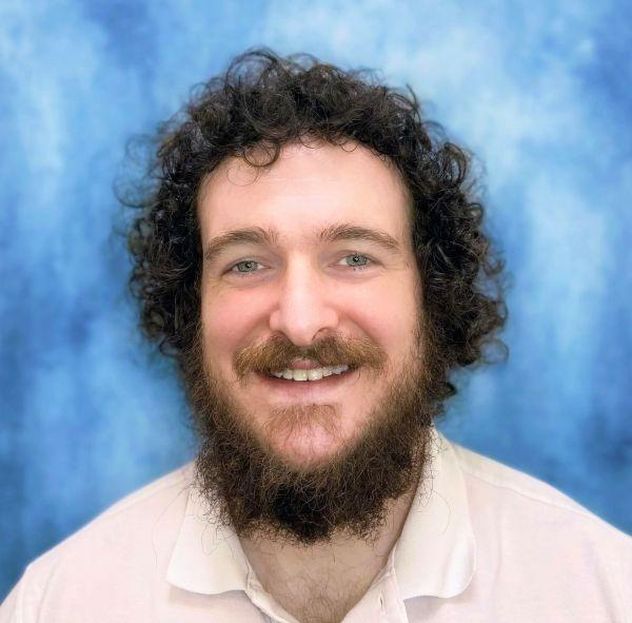
Sam Funderburk:
I think what we call aloofness in young men, being distant and separated is expected. I mean, it's become a joke now that men have these longstanding relationships and friendships for 10, 20 years, but they don't know what their own friends actually do for a living because we just don't talk about things and it's expected to be normal. It's not normal.
Shannon Kopp:
It's not normal, that's how Sam Funderburk named something many of us have learned to accept. The idea that emotional distance, especially among young men, is just expected. In this episode, Sam shares what it cost him to stay quiet, and what changed when he finally stopped pretending he was fine. This is part two of our three episode Say it Brave on Campus miniseries here on Mental Note.
I'm Shannon Kopp, a National Mental Health Advocate with Eating Recovery Center and Pathlight Mood & Anxiety Center, and I'm guest hosting this series to share real recovery stories from college and graduate students. Today I'm joined by Sam, a Neuroscientist and Data Analyst, who opens up about anxiety, depression, and suicidality during college and grad school, even while appearing high functioning on the outside. We talk about the pressure of always chasing the next milestone, how gender norms made it easier to hide pain and plain sight and why prioritizing mental health didn't end Sam's future, it made it possible. You're listening to Mental Note podcast. I'm Shannon Kopp, sitting in for Ellie Pike.
Sam, welcome to the show.
Sam Funderburk:
Thanks, Shannon. Thanks for having me. I'm happy to be here.
Shannon Kopp:
Can you share with us where you're tuning in from?
Sam Funderburk:
Yeah, I am in Columbus, Ohio. I moved here, I've been in the Midwest for almost all my life and I don't have any plans on leaving anytime soon.
Shannon Kopp:
Awesome. Well, I want to pick up with a story you shared with me that we weren't able to cover during the Say it Brave on Campus event back in September, which is when you told your graduate school thesis advisor about your mental health challenges. And could you take us to that moment and provide a little context there?
Sam Funderburk:
Yeah, absolutely. So 2021, summertime, late summertime, I'm in grad school. I'm year four in a PhD program. I have a small child at home and it's the middle of the pandemic. Kind of a perfect storm for not just struggling with these kinds of things, but feeling isolated. And I remember I find myself being checked in at the ER for suicidality, and I think I should probably let my boss know that I'm not going to be at work in the near future. So I sent him a text. Straight to the point, I'm fortunate that I had a very open and transparent relationship with my boss at the time in grad school, the principal investigator of the lab.
And I said, "Hey, I am being checked into the ER for suicidality. I'll update you when I know more."
And he responds almost immediately, "Dude, holy shit, take care of yourself."
And what struck me really about that is that I think he was thoroughly surprised at that text. I don't think he saw it coming. I mean, he knew a lot about me. This is a person who for the last four years of my life, I had spent eight plus hours a day, sometimes seven days a week with in the trenches of graduate school life. I was his first graduate student, it was a young lab. We were in the lab every day talking things through. Sometimes at 2:00 in the morning, texting back and forth, hopping on calls to try and figure things out, and he didn't see it coming. He was probably the most surprised actually of anyone when it happened. I mean, this is the person that aside from my immediate family, I saw and spoke to the most, in an environment where stress is the norm. And theoretically, we're supposed to be keeping an eye out for that while we're taking care of ourselves and pushing these things forward.
But it gets lost in the everyday hustle of graduate school life, which I think has a lot of familiarity with college in general, but especially in graduate school where we know that 50% to 60% of people entering graduate school are going to deal with mental health issues, we still sometimes don't see it coming.
Shannon Kopp:
Yeah. And I think that speaks to all of the misperceptions that still exist around depression and anxiety and mental health challenges, that we can see them coming, that someone is wearing them and they're obvious, but so many of us are high functioning until we're not, right?
Sam Funderburk:
Yeah.
Shannon Kopp:
And how difficult it can be as a student with goals and dreams to stop before it gets to the point of the ER and say, "What's going on here? What matters more? Is it my mental health? Is it my thesis? Is it my graduation date?" And these are really difficult choices. They can be very difficult and isolating.
And so at Say it Brave on Campus, a lot of the discussions we have are to normalize talking about mental health with peers, with advisors, with counselors, and telling the truth, which often is a holy shit myself. I can't believe I'm here. Mental health challenges are serious. And I'm grateful you were able to tell your thesis advisor and seek some help for that. And I want to back up now and talk a little bit about your college experience, and particularly how prior to this, stigma and societal norms around male identity impacted your ability to reach out for help.
Sam Funderburk:
Yeah, absolutely. My experience in college was a different nature than this acute suicidality I dealt with in grad school. In college, it was really about just overwhelming anxiety. And I think I spoke about this at the Say it Brave event, but getting to a classroom in a discussion section where you're expected to say things and talk things through, this is why you're here at college, and just this feeling of paralysis. Not even just mental paralysis, it felt like physical paralysis, trying to get myself to do something, trying to speak up and say something.
Perhaps ironically or fittingly, it was a psychology discussion section where this really came to a head where I was dealing with anxiety, social anxiety and generalized anxiety overlapping. But really it's, what comes back to me is this sense of, I think what we call aloofness in young men, being distant and separated is expected. So you can play off that, "Oh, I don't really care about this discussion section, this class. I'm just here putting the work in."
But you can play it off as the distant and cold male figure, especially as a young adult and hide behind that mask, which makes you not really have to address it because that's what's expected of you. And I think that does a disservice to maybe men in particular when they're dealing with these kinds of issues because it's not normal. We've normalized it as a society, baked it into our perceptions of and expectations of how you're expected to participate, not just in discussion sections, but in social situations with your acquaintances. I mean, it's become a joke now that men have these longstanding relationships and friendships for 10, 20 years, but they don't know what their own friends actually do for a living because we just don't talk about things and it's expected to be normal.
But we know that having deep, intimate relationships with your peers is fundamental for your mental health and flourishing long term. But we've baked into society that, no, that's not a normal thing to do. And so like I said, you can hide behind that mask and not have to address it, not have to face it head on. And maybe that is who you are as a person, or maybe it's something that you're struggling with and want to change, and those don't have to be mutually exclusive. We're raised in this society with these expectations and perceptions, and that can become our default without having to really address it.
And so I think that delayed my own confronting of this and myself. Looking back, I was already finding myself in this niche in middle school and high school, and it wasn't until I was off at college where I finally felt like I had to do something about it because it was... In college, you have this hard break almost with who you were in high school, at least if you're fortunate enough to go off to college somewhere away from home, where you see yourself in a new light.
I think for me personally, that helped define the problem. I couldn't just continue my old ways and assume that it was normal and the way the things were going to be. I was able to at least see myself in a new environment against a new group of peers and evaluate that critically. And a lot of people don't get that chance, but at least for me, I was able to use that as a springboard to address it and eventually see a psychiatrist, talk to a therapist, and get at these issues.
Shannon Kopp:
Yeah. And at Say it Brave on Campus, we hear this a lot that we struggle alone, we struggle to say it brave, to tell a trusted peer, "I'm not okay. I'm acing this thing, or I'm maybe not, but I'm not okay inside." And we tend to think there has to be absolute crisis or inability to get out of bed before action is taken. But treating mental health like our physical health, equalizing the two is really important, but not talked about enough. And so you struggled with anxiety in college and you've shared with us this moment where you struggled with suicidality, and after that, you sought treatment. I'm wondering if you could share a little bit about what that was like for you and what it meant to pause your life and for the first time really prioritize your mental health.
Sam Funderburk:
Yeah. I'll start just by saying that taking that first step was far and away the hardest part. And I think that's honestly even a little cliche at this point, but really it is true. If you can get yourself to take that first step, the rest isn't easy, but you have some momentum behind you and you are able to get yourself through it a lot easier. But I mean, that is the thing that delays it month after month, year after year. It was incredibly challenging to step away. It came to the point where it had to be a crisis.
It was the third ER visit that finally got me to actually commit to real treatment, to a radical break with the status quo and the norm of what I had gotten myself used to. And once I was there, I checked into a 30-day inpatient facility, and once I was there and able to actually focus on the issues in front of me without having those issues jump up and demand their attention in their own right, it was a lot easier. It allowed me to separate myself from the environmental issues, the interpersonal issues that I had gotten myself into with my mental health and actually address those.
For me, specifically, taking the time to do an inpatient treatment route was fundamental to be able to actually do something about the internal issues that I was bringing to those situations. There are a bunch of different ways that people seek treatment. In college, it was outpatient therapy, seeing a psychiatrist, and for that, that was appropriate. But for this much more severe depression and suicidality that I found myself in, taking that step to do the longer term inpatient route was the hardest, but also the most important, because it let me actually focus on the issues.
Shannon Kopp:
Yeah. And it sounds like that hardest step, what was depression and anxiety and the suicidality telling you as far as not going?
Sam Funderburk:
Yeah. And the classic ones are, you're already feeling overwhelmed that everything is going to fall apart at any second. But if you take a step away and try to do something about it, well, that's just going to make it happen even faster. That it's just this imminent sense of doom that's just permeating everything. And you're throwing yourself at these problems, internal, external, repeatedly, day in, day out, thinking that if you just get through the next step, then, oh, well, things would normalize and I'll be okay. If I can just get through this next meeting, this next milestone, then I can deal with the rest of it then. But there's always going to be another thing to deal with. And if you don't take the time to develop the skills, to develop the internal reflection, to constructively approach these problems, then you're just going to be battling that next step, that next step, that next step until the crisis happens.
Shannon Kopp:
Yeah, they tend to not go away until dealt with, and what I'm hearing from you is how beneficial it was to not deal with it alone. We can't deal with it alone in a similar way to if you have a physical health issue and you go to the doctor, you may need a team of doctors working with you on that physical issue. Having a team and dedicated time made a real difference for you with your mental health challenge.
Sam Funderburk:
Absolutely. And I mean, that's one thing about inpatient treatment is that you do have a team. You have a dozen people who are helping you work through things and that really makes all the difference.
Shannon Kopp:
And was it hard to be in treatment and pause your studies and your graduate work?
Sam Funderburk:
Absolutely. But taking the time away also reinforced that you have to have balance, that it can't just be about getting the degree, it can't just be about pushing your thesis forward. When you're in the thick of it again, it feels like that's the most important thing that you have to keep pushing, pulling that lever over and over again. But taking the time away from it allowed me to put it in its proper context, that this education that I'm getting is just another part of my life. It's not the only part of my life. What's the point of finishing this thesis if I'm not going to be here to do anything with it? You have to prioritize your own ability to push forward or else this work that you're doing isn't going to matter in two months anyway.
Shannon Kopp:
That's very true. Thank you for sharing that. So Sam, how do you care for your mental health today and how has this evolved since college and graduate school?
Sam Funderburk:
Yeah. I think the main difference between Sam today and Sam two years ago, five years ago, 10 years ago, is that I'm much more willing to say, let's stop this external thing. Let's pause. Let's take a step back. Let's focus on ourself for an hour, because when you're in college and you have these deadlines and you have these assignments when you're in grad school and you have these meetings that you have to get ready for and this research to do, it feels like you have to work on that now and you have to keep working until it's done. But giving myself the grace just to step away for, like I said, even an hour, that other stuff isn't going to go away just because you don't get it done right now. If you can give yourself the space to step away and just do anything else, you're going to be able to get back to that original problem that you were staring down much more clearly.
So giving yourself balance and space to get myself in the right space to approach these issues, I think is really the main thing that I've changed about how I approach life, really. Again, going to sound cliche, but making myself the priority. The work is important, the studying is important, the research is important, but you have to make sure you are bringing your full self to the problem before you're going to actually effectively accomplish it.
One tangible thing that I've made a difference in is just getting outside more. I think we've all in college been, "Oh, I'm going to go to the library for the next 12 hours and just crank out this research paper." But just getting up, walking for 15 minutes somewhere, somewhere open, somewhere green, I think for my own mental health has made a big difference. Maybe it's not outdoors, but just a change of scenery, not locking yourself into this pattern of, "I have to get the work done. Let's just keep pushing until it's done."
Shannon Kopp:
Yeah. I think I hear you saying, which I relate to so much, we can often be so zoomed into our goals and our tasks and the project and the work in front of us, but if we can't zoom out, if we can't have a bigger perspective, and we're scared of taking that, we're afraid that then the work is going to somehow fall apart. But without that perspective, the work will fall apart because we're the ones doing it. And so being able to set something aside or set it down for a little bit to prioritize mental health.
And I do think as a mother of two boys, those societal gender norms can be so damaging to humans who identify as male because like you said, with your friends, for example, or that joke you heard that we've known each other for 20 years, but what do we know about each other? How deep do we go? And the value of having peers in your life, trusted people in your life, that you can talk about mental health, which is a deep concept in how males can normalize doing this more often because it matters. And do you have people in your life you can go deeper with today? And does that benefit your mental health?
Sam Funderburk:
Yeah, absolutely. But I have to say, that was an intentional space that I made for myself. That wasn't something... A lot of friendships, we just assume that things will fall into place as we need them to, but there are these spaces that we have to make intentional space for. And so going out of my way and forcing myself to start those initially uncomfortable conversations is something that's hard, but immensely worth it in the long run. I've gotten myself to a point where I have friends who can recognize that something's going on before I even recognize that something's going on. And it's because I've made this, again, the intentional point to normalize it within the relationship. And it's noticeable between different relationships and friendships that I have, where those spaces are and where they aren't. And it comes down to, did I take the time to build that relationship in that specific way? And that's something that even once you built it, you have to keep cultivating. It's not easy. It's not something that comes naturally to a lot of people.
And I want to take a step back actually and say my mother was studying counseling and what made a very big point about instilling this in us as kids, but even then, it's not easy for me. I come from a family who has emphasized bringing things up and not letting things stay hidden. And even then, it's something that I have to think about and go out of my way to intentionally create. Just as a way of saying, if it feels unnatural, that doesn't mean you're doing it wrong, it's just, it's a hard thing to do given the society and the expectations that we find ourselves in.
Shannon Kopp:
Totally, yeah. And if you could go back in time, what would you tell your college self and your graduate thesis self?
Sam Funderburk:
It can wait. Not your mental health, but everything else. When life closes a door, you can open it again because that's how doors work. And I don't want to minimize that a lot of times we find ourselves in places in life where we do have to take a step back from something and we do have to close a door or say no to an opportunity because of our own struggles, but that's not going to be the only opportunity that opens. And if you can make sure that you're going to be here and you're going to be equipped to respond to the next time an opportunity comes up, there will be more opportunities. You might not get exactly the same opportunity three years from now when you're ready for it, but there will always be more opportunities if you can make sure that you're going to be here to answer them when they come.
We feel like what's in front of us right now is it. If we don't pursue this right now, then whatever we've imagined ourselves wanting to be in five years is going to be gone. But I can say personally, I took a step back from graduate school for a month. I eventually ended up taking a master's and not even finishing the PhD, and I am now three years later, four years later, doing exactly what I wanted to be doing with my life. It wasn't the path that I thought I was going to find myself on, but because I was able to take the time to set myself up for success when the opportunities presented themselves, I'm still right there doing what I want to do, making the difference that I want to make, and I'm still here to do it.
Shannon Kopp:
That's so amazing. And I'm going to go off script a little bit, but what do you think your biggest takeaways from that month in treatment were? What did you gain from that month focused on your mental health?
Sam Funderburk:
Creating some space between you and the things that you're dealing with, I think has been fundamental. Something that I discovered as a therapeutic avenue when I was in treatment for a month was ROTBT, radically open dialectical behavior therapy. And a lot of what that was was recognizing when things are happening beneath the surface and then approaching issues without being immediately emotionally invested in them, which we are. I mean, it's our lives. These are the most important things that we're ever facing is how it feels, but giving yourself the space to take a step back and evaluate them a little more critically. And specifically in the inpatient setting, that's one of the few places where you can really work on that skill because you have the space, the space is granted to you and now you can work on those skills when otherwise you might not have that space.
Shannon Kopp:
I love that. I hear you talking about space as in distance from your day-to-day life and those stressors, but also cultivating space inside of yourself so that when a thought comes up or a feeling comes up that's overwhelming, that you're not completely identified and invested in it, that you're able to create some space around it. And in that space, you can take action, talk to someone, do something. That's really powerful.
Sam Funderburk:
A mantra that I find myself coming back to since then is a simple phrase, but it's don't believe everything you think. And this is something that we talk about in therapy a lot, which is your thoughts are not you. Sometimes your thoughts are things that happen to you and that you have to respond to, but just because you automatically think something doesn't mean that that's the way it is. And I think that's a lot of where that space comes in.
Shannon Kopp:
I think so. And I think that also the thing that we hear a lot is this idea that we have to be in crisis before I can get help and trying to normalize and encourage seeking help sooner before the crisis happens, which can be really, really hard. And I think the more we talk about that, the better.
Sam Funderburk:
We talk about physical health all the time and how prevention is the most important thing in physical health, but that's something that we, I think, just ignore when it comes to mental health. Like you said, we think that we have to wait till it's a crisis to actually do something about it because our mental health is invisible. If we mask it efficiently, which a lot of us are really good at doing, no one sees the struggle and it feels like we're just making space for ourselves for the sake of making space for ourselves. But that's not necessarily a bad thing. If we can prevent those crises from happening in the first place, I think that's what we should do.
Shannon Kopp:
Sam, thank you so much for sharing your story. And I think what I'll take with me today is it can wait because that is a truth that is easily forgotten in our society today and it all can wait except for our mental health. If we don't have our mental health, we can't have anything else, so thank you for that reminder. And I wanted to close by asking, now that you've prioritized your mental health and you're in life today, what are you most looking forward to?
Sam Funderburk:
The thing that I'm looking forward to most of my life is, I think the most important thing for me to still be here is I have a five-year-old son who loves exploring the world and I, because I took the time to focus on myself, I'm here to help him do that. That's just something special that I will never get enough of. And it's hard to think that that wasn't always a given, but I'm here, we're here, and we're moving forward.
Shannon Kopp:
That's amazing. Oh my gosh, I'm so glad you got to share that. That made me tear up, that's awesome.
Sam Funderburk:
If my story can help at least one other person, then maybe it was worth it.
Shannon Kopp:
Thank you.
Sam's story is a reminder that mental health struggles don't always look dramatic or obvious, and that you don't have to be in crisis to deserve care. Delaying support until the end of a semester, project, or whatever arbitrary deadline you've set, usually costs more than it gives. As Sam shared, stepping away to prioritize mental health isn't giving up. It's choosing the long game. If you're listening and wondering whether your burden is "serious enough," let this be your permission to pause, to reach out and to remember. It can wait, but your wellbeing cannot.
Thank you for listening to Mental Note podcast. Our show is brought to you by Eating Recovery Center and Pathlight Mood & Anxiety Center. If you'd like to talk to a trained therapist to see if in person or virtual treatment is right for you, please call them at (877) 850-7199. If you need a free support group, check out eatingrecovery.com/support-groups or pathlightbh.com/support-groups. Mental Note is guest hosted by me, Shannon Kopp, produced by Ellie Pike, edited by Carrie Daniels, and directed by Sam Pike. Till next time.