Ellie Pike:
When you hear the term picky eater, you might think of a strong-willed kid theatrically refusing to eat food at a family mealtime. Annoying, but ultimately no big deal, right? Well, for some people, that picky eater label might mask a much more serious condition.
Crystal Weideman:
I hear it all the time around me, people saying, "Oh, you're only eating that? You're so picky." Well, maybe it's because they have a reason. Picky eater may not actually be what you think it is, and it could be an active eating disorder.
Ellie Pike:
Meet Crystal.
Crystal Weideman:
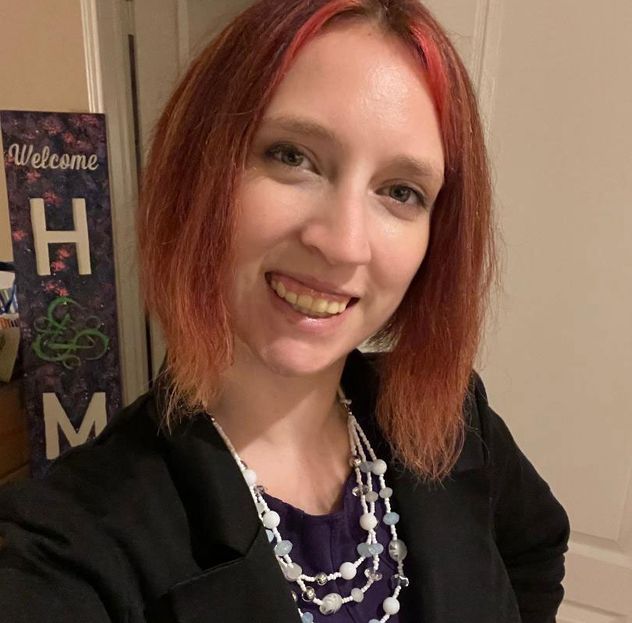
Hi, my name is Crystal Weideman. I am a high school science teacher from Dallas, Texas. I am a degreed meteorologist. I used to be on television. That is my passion in life is weather. Another passion of mine is advocacy for mental health. So I have an eating disorder called ARFID, which is avoidant/restrictive food intake disorder, I have a phobia called emetophobia, which is a phobia of vomiting, and I have OCD, otherwise known as obsessive compulsive disorder.
Ellie Pike:
Our podcast past discussions of ARFID are great, and we'll link to them in the show notes, but they tend towards the clinical, defining the disorder, exploring the types, et cetera. But it's rare to find someone with the lived experience of ARFID who's able to talk about it. And that's why I'm excited to speak with Crystal today.
Crystal is someone who has learned that recovery isn't about eliminating fear. Rather, it's about learning to live beside it. Today, she opens up about her journey through treatment, how she learned to trust food and herself again, and what recovery looks like when it's not linear, but layered with courage, curiosity, and community.
You're listening to Mental Note Podcast. I'm Ellie Pike.
So I would love to just dive in to some of your history. So perhaps what was life like for you as a child, especially in relationship to food?
Crystal Weideman:
So as a kid, I always remember having food issues. I would have certain food rules. I would follow them without even knowing they were food rules. And I was very, very tiny. And my mom noticed that when I was a little kid, and she decided to take me to multiple doctors to ask what was wrong when I was three, four, five. And every single doctor that she went to said, "Oh, she'll grow out of it. Oh, pick eaters. It'll be fine. Don't even worry about it." And the truth is I never grew out of it.
So my mom did the best that she could with leaving food out and just making sure I was eating something. She would also push me to eat new things sometimes. And because I feel safe with her, I was able to do that when I was little, which I'm so thankful for that chance. But it was really, really hard to eat. I never ate until I felt full ever.
Ellie Pike:
And when you say that you grew up with a lot of food rules, can you name what maybe a couple of those might have been?
Crystal Weideman:
Oh yeah. So food couldn't touch each other. So I'm half Mexican. I don't know if I told you that before, but I am. And so we eat a lot of beans and rice. And so whenever they would touch, I would eat around that. I would never eat when they were touching each other. And then if other foods were touching, I wouldn't eat that either. Unless I said it was okay, I would avoid certain foods at certain times. My mom told me that I would not eat my lunch at school because my sandwich was in my lunchbox for too long without the ice feeling cold enough. So I would just leave it there. So I would avoid a whole bunch of things.
Ellie Pike:
Was texture ever a problem?
Crystal Weideman:
Sometimes it would be. Yeah. I know I avoid certain foods now because of texture. But it wasn't huge. It was just more feeling full that I did not like.
Ellie Pike:
Right. No, that's interesting. And did you ever have a fear of gaining weight?
Crystal Weideman:
No, never. Actually, I wanted to gain weight when I was a kid. But no, it's never centered around body image for me at all. Never been afraid of gaining weight. I've mostly been afraid of losing weight.
Ellie Pike:
I think that's really helpful just to hear from a lived experience perspective because that's what professionals do say. ARFID is a different kind of eating disorder. It's not based on fear of weight gain or focus on weight gain or weight loss. And so it's just helpful, I think, for us to hear from you and what that personal experience was like.
So you talked about having OCD and emetophobia as well. Can you share a little bit about what that looked like in your upbringing? Maybe when did that come about? And in what form?
Crystal Weideman:
Yeah. So those are also two things that I don't know where they started and I've had forever. So with my emetophobia, what would happen is that's why I wouldn't eat till I felt full because I thought if I felt full, then I would throw up and then I would keep throwing up and then I would die. That was my logic. It still is. But that's when I was little, I wouldn't eat till I was full.
If anyone coughed, I would freak out. I remember my siblings being sick. I would run into the other room and not eat for days because that was a compulsion that I didn't know that I had when it came to my phobia. And with OCD, a lot of my phobia rules go into that category. So avoiding people who were sick, avoiding areas that they were sick in, not talking to them for a while. If they ate a certain food and then got food poisoning, I would avoid it because that meant I wouldn't get sick. I would do that all the time without even realizing it. And then I remember in elementary school, there would be kids I remember distinctly still that have thrown up because X, Y, Z reason, and I would avoid those kids and be terrified to talk to them. So OCD and the phobia kind of went hand in hand.
OCD also was really big for me when it came to moral scrupulosity. So that's when there's religious scrupulosity or moral scrupulosity. Morals is when you're more focused on if you're a good or a bad person, if you're upsetting people. I was afraid that my parents would get mad or teachers would get mad or friends would get mad and then they'd disown me and never talk to me again. So I would never speak my mind when I was a kid. I would hold on to a lot of emotions. And that's actually something I still struggle with as an adult. So I didn't know that was OCD, but it is.
And I also... There was a lot of things I wouldn't do unless they felt right, which can't describe what that means. It just... in my body, it had to feel correct in order for me to clean my room, do my homework, do some certain thing. And that's something I'm currently still working on.
Ellie Pike:
Thank you for sharing. And I put myself in your little kid shoes and I think about some of that might feel normal at an early, early age, three, maybe four. But then at some point, I'm sure you started to notice that you were pretty different than your peers.
Crystal Weideman:
Oh yeah.
Ellie Pike:
So what did that experience of being in school and making friends... How has that impacted?
Crystal Weideman:
So luckily for me, you might be able to tell I'm an extrovert, so I had no issues making friends. But I would never tell them about my eating habits or my phobia. I kept that completely a secret. I remember in college is when it started to become a thing. That's when people started questioning me about certain things. Like growing up in Texas, the thing is you don't eat well-done meat, but I always eat well-done meat because that's a safer thing for me if I do eat meat. And I remember my college friends and my suite-mate tricked me into eating something that was more red or pink and I had a big panic attack and they were like, "Oh my gosh, so you're serious. You can't do this." I'm like, "Yes, of course I'm serious." That's when it started to become noticeable to other people. Luckily, it didn't really impact my friendships that much, really up until I started to not do so well.
Ellie Pike:
Yeah. So what happened next?
Crystal Weideman:
So then in college, went to Texas A&M for meteorology since that's my passion in life is weather. And I graduated and then I was on television for four years doing meteorology on TV. It was the funniest experience ever, but it was really tricky because I started to have some medical issues like gallbladder problems. So I started to not eat as much. And then that triggered things, but I wasn't sure. I thought it was just, oh, medically something's going on. And then after a while, I discovered I needed to leave television. And so my brain was like, "Oh, the only thing that's been in your life as long as weather has is emetophobia. So we're going to just be afraid of throwing up all the time."
And that's when things fell apart for me and I avoided everything. And I got into this huge, "I'm not eating anything. I'm not eating it to be full. I'm only going to eat the same five things or four things, and it's only going to be a few bites of each thing." And it was a very scary experience because I don't ever remember being that bad ever until then. So that was in December 2015.
Ellie Pike:
That sounds so scary. And I'm sure for your family and friends around you too, because you had held so much of that very closely, that by the time that you finally realized that you needed help, was it you that realized that or was it the people around you urging you to get help?
Crystal Weideman:
It was all me. I'm very thankful to myself.
Ellie Pike:
Good.
Crystal Weideman:
Yeah, it was me because I realized, "This is very different from what I've done previously. I know I've had issues, but now I can't eat. Why is that the case?" So I did a lot of research online and then, against my mom's advice, I went into therapy and started talking to someone about it as I was doing research in like early 2016 and I found out, oh, I might have this phobia. Oh, I might have this eating disorder. Didn't think about OCD. That wasn't something that was on my radar at that point. And she agreed with me and then I decided to put myself in the Eating Recovery Center.
Ellie Pike:
That is wild and I think takes a lot of courage and self-awareness to know that you need that help.
Crystal Weideman:
Thank you.
Ellie Pike:
But obviously you were spiraling and you had to step out of the job you loved. So that to me is huge red flag, of course. Before we dive into a little bit more about your treatment experience at Eating Recovery Center, can you describe ARFID from your perspective? So your diagnosis being the avoidant/restrictive food intake eating disorder, which is a little different than other ones. So describe how that would actually play out for you.
Crystal Weideman:
So ARFID is different from the other eating disorders. It is very unique because it can be different for a lot of people. For me specifically, it still has nothing to do with body image, but I either avoid or restrict eating out of fear of throwing up for the most part. So I will avoid certain food groups. So back when I was not doing well, I would avoid all meat, I would avoid all dairy because those are things that people would get food poisoning from. At that point, I think Chipotle had their whole E. coli thing and I didn't eat Chipotle for years because of that. So I would avoid certain food groups and then I would restrict what I was eating so I wouldn't eat very much, maybe like a couple of bites maybe because I didn't want to eat too much to then feel full to then throw up.
So it was all about eating safe foods for me, finding those five things, like I said, that were safe, and then just sticking to that the whole forever until I got help.
Ellie Pike:
Until you got help, did most people just perceive you as a picky eater or did you just hide it and just not eat with people and they didn't really have many opinions?
Crystal Weideman:
They perceived me as a picky eater, which infuriates me because it wasn't even by choice. And I know that's a really common thing. I hear it all the time around me, people saying, "Oh, you're only eating that? You're so picky." Well, maybe it's because they have a reason. Maybe they actually can't eat something new. There's so many reasons. So yeah, that's something I teach people a lot now is picky eater may not actually be what you think it is and it could be an active eating disorder.
Ellie Pike:
Thank you for sharing that. And I'll make sure in our show notes that we link to one of our other podcasts, which is about exactly that. Is it picky eating or is it ARFID and how to know the difference and the questions to ask. And I think one important thing to mention is that this can show up in children or it can show up in adults. It does not discriminate, right? And we know that about all eating disorders, but ARFID is certainly one of those.
So once you attended treatment, in your care at ERC, how did you learn to start coping with ARFID? And maybe can you give some examples perhaps?
Crystal Weideman:
Yeah. So it was so hard to be in there. I cried, I don't know how many times every day. I think that's pretty common because it's a big thing to go do and get help for yourself. So while I was in there, I found that I had to kind of prove to others that I had an eating disorder because I was the one that put myself there. And also I didn't have a "normal eating disorder," which that's not true. And so I just kind of ignored everybody and decided I was going to do what I was going to do.
So I really took what they said to heart. So whenever they taught us values or act skills or CBT skills, I really, really took it to heart and wrote down a bunch of notes. I just ate until I felt full. And then I did... I think I had a fidget toy that I would play with all the time and I would use that after every meal. I took process groups very seriously talking really about my feelings. I felt kind of bad because I took up a lot of the time in groups, but that's a space to do that in. You're allowed to take up space. So I utilized everything that I could and kind of molded the treatment into something that I could use for myself. And I'm very fortunate that they gave me those learning skills in order to take my recovery further.
Ellie Pike:
I really want to put a pin in something that you said because I was trying to connect all of the dots. And I'm a therapist, right? So I know some of this, but I think especially for the layman listening to this, I want to make sure that I can put enough pictures to your words. So when you said you would just start to eat until you got full, I felt anxiety within myself because I was like, "That's a huge, huge deal, huge deal for you at the time."
Crystal Weideman:
Yes.
Ellie Pike:
And I think about your fear of vomiting, it's a real phobia. It's a real fear. And I compare that to, for example, if somebody is scared of heights and all of a sudden you tell them, "Hey, you need to go up to the 10th floor and look out of this balcony." That is so terrifying.
Crystal Weideman:
Yes.
Ellie Pike:
And so we call that exposure therapy in the therapy world, right? And we normally don't start with the scariest thing. We normally start with what feels achievable, like look at the elevator and then maybe take the elevator to the first floor. We don't start by going up to the 10th floor to work on a phobia. So I wonder for you, when you were exposing yourself to those fears, how did you make it feel achievable and also have the support that you needed when you were scared?
Crystal Weideman:
Well, I didn't finish every meal. I remember thinking until I feel full, I'm not going to force myself to go too far at that point. And so I would finish every snack, but not every meal, and I would just go until I felt that sensation. And I decided to go all in with that, even though that's probably not the best thing, especially since I didn't know at this point that I had OCD. I just decided to go all in the recovery and feel full as much as I could because I felt like I was in a safe space to do so, and if anything were to happen to me, this would be the place to do that. And it probably wasn't the best place to start out with my OCD I found out later, but the fact that I was able to do that at all is, I think, pretty impressive.
Ellie Pike:
I think it says a lot about you and your own resilience and your own self-awareness that was like, "I'm determined to recover." And I think it says a lot about your environment. So what made it feel safe to you?
Crystal Weideman:
Good question. Honestly, I don't really know. I trust people pretty easily. That might be a good or a bad thing, but for me in that environment, I felt like because we were all in a similar situation, that I could do what I needed to do and speak openly. And as I started to do that more, I became closer to those recovery friends. I still talk to them to this day, almost 10 years later. And so they've become really good friends of mine. And because we all were being real with what we were going through and we were all determined to do what we needed to do, I think that was the environment that made me feel really safe at ERC. So there was a time where I had a really big panic attack and my best friend in the center really helped me out to get out of that. And if I didn't have him, I don't know where I would've been at that point. So yeah, making friends in the center was super important.
Ellie Pike:
That peer support is so important, whether it's in treatment or after. And I think it's just as important after treatment as it is during.
Crystal Weideman:
For sure.
Ellie Pike:
And that's why ERC offers so many free support groups because we want that kind of continuum to take care of every individual as they're still practicing, being resilient and confident in recovery down the road.
Crystal Weideman:
Oh yeah.
Ellie Pike:
So I love that that's part of your story. Obviously treatment is not easy and you really worked your way through that. I think you were there for several months, correct?
Crystal Weideman:
88 days. But who's counting?
Ellie Pike:
I was counting them down. So what was recovery like after you discharged and kind of from that point on to now?
Crystal Weideman:
After I discharged? That was November 2016, I did okay. But honestly, they don't tell you about what happens after you leave, how all of the safe bubble that you're in the center just kind of like doesn't... it just pops, I guess, and you're just in the real world now. And yeah, you have your tools and you have your outpatient team and support groups outside, but it's very different. So I found that after a while, I plateaued in my recovery. So I was able to eat until I felt full, I was able to eat a few new things, but I was still really anxious about it and I had no idea why I was so anxious.
So while I was in ERC, they had brought up to me that I might have OCD. Well, they called it borderline OCD, which is not something that's real. You either have it or you don't. And so that was in, I guess it was 2017 or 2018, I decided because my recovery is plateauing and I didn't feel like I was getting any better, that maybe I should explore what OCD is. So I started doing some research about it. I found support groups were super helpful. So I found an in-person OCD support group here in Dallas, and I just asked them a bunch of questions and listened to their stories. And then from there, I went to an OCD conference, and it was in Austin, so it wasn't too far from me, in 2019. And when I was there, I felt like I was at home. That was exactly what was up with me, I felt like. So that was the missing component.
I got diagnosed in 2020, April 2020, so that was during COVID. And since then, I've been able to work on the eating disorder more, connect dots as to why my recovery has been plateauing at that point. And I've gotten so much better since then. I've eaten sushi. I've eaten red meat that was actually kind of pink now. I eat till I'm full almost every time I eat. It's been a really cool experience.
Ellie Pike:
That is wild. And it's amazing that you really went to seek out what that missing piece was to make the puzzle work a little bit better together. And so if your fear of vomiting was a 10 out of 10, say when you were in the throes of your ARFID diagnosis, how would you rate it now?
Crystal Weideman:
Right now, I would probably rate it at like a three, which is insane to say right now. Oh my gosh.
Ellie Pike:
Amazing.
Crystal Weideman:
Yeah. I'm probably consistently at a two or a three. And then of course, it'll go up. I had some anxiety this morning, but then it always comes back down and it's just-
Ellie Pike:
Right.
Crystal Weideman:
... yeah, it is so much better. I never would've thought I would've been here ever.
Ellie Pike:
So now when you're experiencing food, it sounds like you're less fearful of getting so full that it'll make you vomit and then less fearful that whatever the food is that you're eating will give you food poisoning, which could potentially make you vomit. So it seems like you've tackled it from so many different angles and really learned how to cope with all these various pieces. And as you mentioned before, even in your introduction, you said, "I have ARFID." And it's a constant, I don't know if struggle is the right word, but it seems like something that you're continually checking in on, right? You can't just leave it alone and not think about it. And I think that that really shows the power of active recovery and being very actively supporting your own recovery journey.
Crystal Weideman:
Oh, definitely.
Ellie Pike:
So what do you do on a given day that you are struggling maybe more than the day before? What are some of the tools that you might pull out that are just beneficial for you?
Crystal Weideman:
So this is actually pretty relevant because I just had a really intense OCD spiral over the last three days. So I'm a teacher, teaching is hard, spiraled out about moral values versus teaching. It was very intense. And I haven't had a spiral like that in a while.
So a tool that I used this time that I usually don't, but this was super helpful was meditation. I found a guided meditation about just breathing and stress relief. And I was at an arcade when this was happening at its peak. So I went to my car and listened to this meditation and just focused on my breathing. And then I listened to some other music that I like and I just sat there and felt the feels, but I also realized that it didn't have to last forever.
Beyond that, what I'll do is I'll talk to people about it. I'll just kind of like, "Oh, I just need to get this out of my head." So I'll talk and then be like, "Cool. All right. Talked about it. Awesome." If it's intense, also I will use a fidget toy still. I carry some dice that I use as a little fidget thing. I've journaled about it. Yeah, distraction is still one that I use, but I make sure that I distract and also sit with the feelings because I need to sit with it being uncomfortable. And I remind myself all the time that this will pass. It always has passed. Maybe I'll get sick, maybe I won't. I don't know. It is what it is. That's one of my favorite phrases.
Ellie Pike:
I think that's a hard one for all of us probably, whether or not we have OCD or an eating disorder or a fear of anything intensely. And so I can really appreciate that and I think we can all learn from it. So you're such an advocate for finding the right resources, building resilience, really seeking that out for yourself, right, even when others might have discouraged it, whether they meant you or not? So what advice do you have for others?
Crystal Weideman:
The advice I would say is to, first of all, know that you're not alone. I know that's very cliche, but it is true. You are absolutely not alone in what you're going through. If you are questioning something, I would just Google something. Or if you know someone has anxiety, maybe talking to one person about it, maybe they know something. I tell my students all the time, I want to be their resource if they have some mental health thing going on because I never had an adult to talk to that I knew of when I was growing up going through this. Yeah, just keep in mind that it will get better and you're never truly stuck, like, "Yeah, I have these things and it's something I will live with for the rest of my life most likely, though I don't feel stuck. I know that it can get better and it kind of goes through waves that's really, really normal." So knowing you're not alone, staying positive and just doing the best that you can and hopefully getting some help also.
Ellie Pike:
I appreciate that you say we just go through waves because whether or not we have a diagnosis, we all have mental health, right? So there's always waves, whether we're anxious about a test and then sad because something happens one day or maybe we have higher highs and lower lows, and just depends on the intensity of it, but we all understand how important it is to have those coping skills because without them, life can be really hard. And I think we all need that resource. So I'm so grateful that you are that resource to your students and now to so many listeners and we're so grateful to have had you on the podcast.
Crystal Weideman:
Thanks. I super appreciate being here. This is the coolest experience. I just want to advocate and talk about this all day, so thank you so much for having me.
Ellie Pike:
Crystal's story reminds us that what we see on the surface, like a picky eater or a rule follower, or even a science teacher who's got it all together, rarely tells the whole story. Recovery from ARFID and OCD isn't a straight climb. It's a practice in patience, self-compassion and connection. If you or someone you love struggles with food avoidance or anxiety, you're not alone and help is out there. Crystal's courage shows us that recovery isn't about erasing fear, but finding the tools, people, and perspective to make life bigger than the disorder.
Thank you for listening to Mental Note Podcast. Our show is brought to you by Pathlight Mood & Anxiety Center and Eating Recovery Center. If you'd like to talk to a trained therapist to see if in-person or virtual treatment is right for you, please call them at 877-850-7199. If you need a free support group, check out eatingrecovery.com/support-groups. Also, if you're interested in a short relapse prevention program through Eating Recovery Center, check out their two-week ARFID session in February linked in our show notes.
And since you're still listening, it means that you like our show. So can you do us a favor and leave a glowing review for us on iTunes, Spotify, or wherever you're listening? Also, sign up for our e-newsletter and learn more about the people we interview at mentalnotepodcast.com. Mental Note is produced and hosted by me, Ellie Pike, edited by Carrie Daniels and directed by Sam Pike. Till next time.