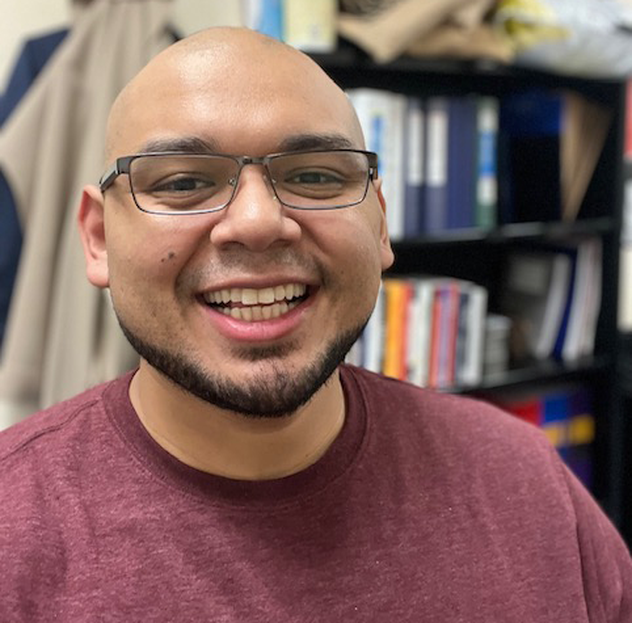
Jay Salazar:
When I said, "Hey, I'm diagnosed with ADHD," to friends and family, nobody was like, "What? That's crazy. I can't believe it." They were like, "Yes."
Ellie Pike:
Pack your lunch and don't forget to have an adult sign your permission slip because today Mental Note Podcast is going back to school with your new favorite teacher, Jay Salazar.
Jay Salazar:
Hi, I'm Jay Salazar. I am a social media content creator, a teacher with ADHD, history of eating disorders, and I use my platform to talk about my story in hopes of helping others deal with some of the things that I deal with on a daily basis.
Ellie Pike:
And while Jay may be the kind of teacher who helps middle schoolers navigate confusing emotions, advocate for themselves, and believe that growth is never linear, it's only because he spent years learning how to do those things for himself.
Jay Salazar:
Sometimes a kid will come up to me, and be like, "Are you overstimulated?" I'm like, "I am." He's like, "Do you need us to stop?" And I'd be like, "No, we're fine." Or sometimes I'm like, "Yes." He's like, "He's overstimulated."
Ellie Pike:
On today's episode, Jay opens up about being diagnosed with ADHD later in life, the years he spent masking his struggles through perfectionism and spite and how therapy helped him uncover the deep connections between ADHD, anxiety, eating disorders, and self-worth. We'll cover some big issues along the way, like emotional regulation, masculinity, and most importantly, what it actually looks like to stop fighting your brain and start working with it instead. By the end, I think we'll all be chanting Jay's classroom mantra, my yesterday does not define my tomorrow. You are listening to Mental Note Podcast. I'm Ellie Pike.
So Jay, if I had met you five years ago, how would you have described your relationship with your mental health and yourself? What life feeling like at the time?
Jay Salazar:
About five years ago, I was very rigid, all or nothing, hot or cold, really hated myself and the way my brain worked. Even though I was always able to achieve, it was like everything was a lot harder. But I always told myself that, you know what? I'm not working hard enough or I'm lazy and that's why something is a lot more harder than it has to be or a lot harder than it is for others.
The funny thing is I come from a family of mental health professionals, and teachers, educators, and I still would've told you, "Hey, nothing's wrong. I'm just not doing what I need to do to be as successful as I could be or should be." But yeah, when it comes to my mental health, I didn't even think to acknowledge it.
Ellie Pike:
And what did you feel about yourself at the time?
Jay Salazar:
It was like this hatred, this negative self-talk. I operated on people not believing in me. I operated on people doubting me. And that's kind of what made me achieve. I was like, oh, I'm going to prove you wrong. I'm going to do this not because I think I can, not because I'm capable, but because you said I can't. And I guess when it comes to ADHD, the spite helped drive me. And it's not a healthy thing, but that's what drove me to do well. I genuinely think if people said, "I believe in you, you got this," I wouldn't have graduated college. I literally had college professors in my major when I picked my major, we had a small program, maybe four to six teachers, at least three of them told me to drop out.
Ellie Pike:
Wow.
Jay Salazar:
They said, "You are not going to make it. You need to drop out." And they took pride in, I don't know if the word's weaning or weeding, but weeding what they called the weak. And they identified me as one of the weak ones. And out of pure spite, I said, "You're wrong." And what took me six hours, seven hours of studying, maybe it took my peers maybe one or two hours a day. And I put myself in the library, put myself in the study room, said no to friends, and I just studied, studied, studied. And it was hard, and I eventually figured it out, but spite was my biggest drive for a long time.
Ellie Pike:
Wow. So you were feeling spiteful and that was your motivator, but you were also a rigid thinker. Things were just harder for you than other people. Can you give another example of what would feel so much more challenging for you versus someone that might be more neurotypical?
Jay Salazar:
Yeah. For a long time, my choice in career wasn't really my choice. I ended up where I am because I said that's a good idea when somebody mentioned it. I went to college because my mom said, "You have to go to college or get a full-time job." And I was 18. I'm like, "I'm not trying to get a full-time job. Sure, I'm going to college."
The colleges I applied to were the ones that were in the air when somebody said, "I applied here. I'm going here." I'm like, "Okay, I'm applying here. I'm going there." The one that I went to, Montclair State University, is the first one that sent me a acceptance letter. Mind you, I got accepted to all eight of them, but I said yes to the first one because I'm like, "Oh, okay. I'm going here." The major that I chose was because I'm in a cafeteria lunchroom, and my friend said, "Hey, you have to pick a major. You're a sophomore." I said, "What are you doing?" He said, "Sports medicine." I said, "Okay, I'll do that." When I became a teacher, it was because I was in a spoken word poetry slam team. And one of my teammates said, "Hey, you would be a great teacher. This is a program I did." So I applied and I went there.
For a long time, I just kind of went with the flow and said yes to things, or more like said, "You're right, let me do that." Rather than say, "What do I want to do? What should I do?" And within teaching, I found things that I enjoy, that I like, and I'm slowly starting to feel like I'm making choices for myself. And that took about 35 years.
Ellie Pike:
Isn't that wild?
Jay Salazar:
Yeah.
Ellie Pike:
So when did you get diagnosed with ADHD?
Jay Salazar:
So there's some lore that I was diagnosed as a kid, and my mother said no, or my mother said that I didn't have it, or she was in denial or she said he's fine. I'm not sure, but that's what my sister says. I got formally diagnosed at around 31. But in 2020 when I was about 30 is when I said, "Hey, I want to seek some help. I want to see if I am ADHD." Even though I and everybody around me knew that I was. When I said, "Hey, I'm diagnosed with ADHD," to friends and family, nobody was like, "What? That's crazy. I can't believe it." They were like, "Yes."
Ellie Pike:
What's wild is you were describing before your diagnosis of ADHD, no one would've called you out as having mental health concerns.
Jay Salazar:
No.
Ellie Pike:
But for you, when you say, "Oh, I got a diagnosis," no one's surprised. So it sounds like your struggle was. way more internal than anyone would've noticed. So what led you to getting that diagnosis in the first place?
Jay Salazar:
Yeah. COVID. It's 2020 and into 2021. We are at home. We go home for two weeks, and then they say, "Nevermind, we're going home for the year." And then the following school year starts at home or starts and finishes at home. And it's a teacher's dream where I'm only teaching maybe two to three hours a day. I don't have hallway duties, bathroom duties, lunch duties. I have all the time in the world to lesson plan and I can't.
I got okay with, I got comfortable with saying, "You know what? Saturday is my lesson planning day. And I will wake up at 5:00 AM and maybe I get done at 12:00, maybe I get done at 8:00 PM. I'm making no plans, but this is what I'm doing today because I will get distracted. I will stop caring about this, but it still has to get done. So I'm not going to do anything else except lesson plan today."
And what takes me today about an hour, I used to just leave 12-hour days to do that knowing that I was going to get sidetracked. And I'm like, that's not okay. What's happening? I was still submitting things on time, but last minute. I was waking up at 4:00 AM to get things done in order to be ready for my first class or I was staying up really late, even though, again, I had all the time in the world. Yes, I had a meeting here and there, but I had the time and I just couldn't do what I needed to do within the window, even though my office and my job was at home.
Ellie Pike:
So the lack of structure kind of exacerbated things that maybe you had always struggled with, but really it took a toll on you being able to prioritize and get things done within a certain window.
Jay Salazar:
One million percent.
Ellie Pike:
So how did having a diagnosis affect you? Did it help you understand yourself better? Was it confusing? Tell me a little bit about that.
Jay Salazar:
Naming it helped me a lot, and it also helped me get medication. But that's all it was. It was medication. I didn't go to therapy with ADHD. I just got diagnosed and got medication. And I've recorded videos about that early journey, and you can see like, wow, this is great. But then it stopped being so great when I wasn't taking the medication consistently, and things that medication can't cure were still happening.
And the biggest thing was it did help to an extent, but I didn't start feeling better or understanding my ADHD until I actually went to therapy for my eating disorder that I didn't know I had at the time, but I probably had an idea that I had at the time. And then at the same time I got diagnosed with anxiety. And when I started working on those things, I started seeing how closely related those things were to ADHD or maybe even because of ADHD.
And I started applying a lot of the things that I was learning with eating disorder and anxiety to my ADHD. And that's when things started to click. And I would argue that I don't, quote, unquote, "need" the medication to function, but my therapist would say it's not about being productive. It's about removing obstacles and making things a little easier than they have to be.
Ellie Pike:
I really appreciate all of your perspective and also the courage it took to get a diagnosis as an adult. As you talk about your having anxiety and then a real realization about having an eating disorder, all of that combined with a diagnosis of ADHD, obviously they influence each other. What has your mental health journey taught you about the idea of external changes and that they don't necessarily fix internal struggles?
Jay Salazar:
Yeah. So a few things. One, when I sought therapy in 2023, it was because of my issues with food. I knew it wasn't things that are healthy. I knew that they were things that are not great for me when it comes to removing food from my body or hiding the food that I'm eating, or waking up in the middle of the night and eating everything in the fridge just to go back to sleep.
So I went in knowing I had issues with food. I didn't know that we were going to be working on issues with my body, issues with my mental health. So I didn't know that all that was going to tie together, and I was going to have this realization that, after having bariatric surgery, after saying, "I have to lose weigh, I have to be smaller," finding out that the world of bariatric surgery, not everybody, but they were all engaging in things that triggered me, things that I did to myself for a long time.
And I had to work through that as well. And a lot of that had to do with ADHD. A lot of that had to do with all or nothing thinking, black and white thinking, negative feedback, negative thought patterns. And there was a lot of internal challenges I was dealing with, some that I knew of and some that I had no idea of.
And then it started becoming, I don't want to say fun, but I love learning about myself. I love learning about why I do things. And I love trying to get better, trying to get better in hopes of helping others because of that connection thing. So if and when I see somebody who's struggling, I can be like, "Hey, this is what I dealt with. Doesn't necessarily mean this is how you're dealing with it. Doesn't necessarily mean this is how you can fix it, but this is what helped me. Maybe it can help you." Because again, I did not know that I needed help, but I knew that I needed to do something.
Ellie Pike:
It seems like you could really relate with your kids profoundly. And I think this generation of kids, and you teach eighth graders, are very emotionally aware and also very aware of diagnoses and mental health. And maybe to a fault, I'm not sure. I'm still kind of wrapping my head around that.
But point being, I imagine you're going to have some really constructive conversations with them. And so as you do talk with them, what are some of the things that you've noticed resonate with them that you can share about your personal experience that you can help empower them to think of each day as an opportunity to work with their brain?
Jay Salazar:
Yeah. I'm a rule follower, and our school made us start every class with a mantra. And I'm like, "I guess I'll have a mantra." And then my thing is, if I'm going to do something, I'm going to try my best to make it matter and make it real for me. So we start every day with a mantra I created in September. It says, "Growth is not linear. My yesterday does not define my tomorrow. I am a work in progress. Now watch me be great." And it's a call and response, right? Growth is not linear. My yesterday does not define my tomorrow. Because I am a work in progress now. Watch me be great.
And I believe it, and now I love it and I say it, and we say it every day. If I forget it, they make sure we do it. Some of them are like, "Can I lead it today?" And they'll go up front and they'll lead it. And sometimes they'll be tired and they don't want to do it, or they say it very low and I'm like, "I don't believe y'all." They're like, "Growth is not linear." And I'm like, "You want me to believe growth isn't linear. You want me to believe this bad day is just a bad day or this bad day in the past has shown me, or you've shown me that you've had a bad day and then had an excellent day the next day. So I'm not going to hold this bad day against you. That one bad day doesn't have to mean a bad week, that a bad week doesn't have to mean a bad month, that you are consistently growing and that doesn't always mean that you're getting better every day. Sometimes we fall back and that's okay as long as we can identify it and move on."
So I do a lot of that and I do a lot of yapping. Salazar yap sessions are the norm. And I know it's annoying and whatnot, but I always tell them like, listen, you could have somebody who's smacking you with consequences or who's screaming at you all the time, or you can have a yap session. And I'm not going to always get you, but hopefully with every yap session, I get one more student to understand, one more student to see, one more student to make a better choice. And that's what I do. I do a lot of talking, and I let them speak and I let them say their piece. And I let them tell me when I do something wrong or when I'm frustrating them. I ask them to tell me when they're having a bad day or they feel sick, or a teacher frustrated them, or I frustrated them, or they're like, I need a couple minutes to put my head down or they feel sick.
The other day I actually asked them because we're in testing season, and I asked them, or rather I told them like, "Hey, it's about to get real serious here and that's stressful. I know that. It's going to cause a lot of anxiety. I know that. And we got to go. We got to go. So there's going to be less grace, and it can't be you disrupting the space and preventing a room full of 25, 30 kids from learning and preparing for the state test. It can't be that. So if for whatever reason you are angry, you are upset, you are not ready to learn, it needs to be you. I'm going to put my head down. I'm going to step out. Can I do this? Can I go to this person's room?
It can't be you're disrupting the space because I don't have the time. It's about to be the end of the year. It's not like, you know what? We'll be better next month. It's like we have to create the space for everybody to be successful now. And if you do that, come back tomorrow, we're good. But if you need to put your head down because you're not in it, that's what I need you to do. If you feel as though you're going to create a space where everybody can't learn because you're not regulated, you need to speak to me so I can send you out the room, send you to a safer space, or another teacher you trust, but that's what I need from you."
And I asked them, I'm like, "Hey, how many of you have asked me if you could put your head down, or you can sleep or you don't feel good and if you can leave the room, blah, blah, blah." And every class, almost half the class raised their hand. I'm like, "This is what I need from you. Can we do that?" They were like, "Yeah." "Is that fair?" "Yes." "Cool." So a lot of that stuff.
Ellie Pike:
Wow. I'm trying to think through if I ever had teachers teach me emotional regulation. You're teaching them that. You're like, "Hey, you're feeling anxious, you're feeling upset, you're feeling like you want to be disruptive. Instead, notice what you need and ask for it or just go do it." And so it seems like you're creating this culture of safety and trust, and also teaching flexible thinking. If today's not good, it doesn't mean tomorrow's going to be bad.
And it seems like those are things that you've been learning along the way in your own journey. If you started five years ago, you described yourself as so rigid and black and white thinking, and now here you are teaching your kids the opposite. It's pretty amazing. So what do you think allowed you to be open to something new? When you were in therapy and you're like, okay, I'm here to work on this eating disorder stuff. And then I guess we'll talk about ADHD and anxiety. What allowed you to be open to thinking differently?
Jay Salazar:
What started me was honestly COVID. I was, again, dysregulated. I was always stressed. I didn't know how to manage my time. I was waking up, before COVID, before I was teaching remotely, I was also getting to the school at 4:30 in the morning. We have the keys. 4:30 in the morning. And working, working, working to try to be ready and doing what now takes me an hour. It used to take me two, three hours.
There was one point off topic, on topic, but there was one point where I was there early at 4:30 in the morning, and I forgot to turn the alarm off. And the police came and they said, "What are you doing?" I'm like, "I'm a teacher here. I work here." They're like, "What are you doing here?" I'm like, "I said I'm a teacher." They're like, "No, I believe you, but what are you doing here? It's 4:30 in the morning." I'm like, "You're right." They were like, "Put the alarm on." I'm like, "I'm so sorry. I'm a new teacher. I have ADHD, I think. I'm not sure. But I'm also terrible at my job. I'm trying not to be terrible." They were like, "Put the alarm on."
Ellie Pike:
Oh wow.
Jay Salazar:
Imagine that is my day. That's how I start. And now I'm trying to teach children. It was difficult. So I didn't have control of myself. So I would yell and I would be angry, and I would speak to the kids in a way that now I would never speak to the kids. And when I went in people's homes in COVID, and I was on the computer and I was in their living room, I caught myself speaking to them differently. And I'm like, that's weird. Nobody gave me feedback. They didn't like, "Mr. Salazar, you're speaking to them differently." It was all myself. And I'm like, that's weird. Why am I thinking about how I'm speaking to the children now? Why am I speaking to them differently now knowing that their parents or their aunties or uncles are there? That's weird.
So when we came back to school after COVID, I was like, I need to keep that same energy and I need to be okay with whatever. And however I speak to the kids, no matter who's in the room, that has to be my consistency. So that was my first step. And it took a lot of patience and practice and trying and trying. And moments in the past where I would want to scream, I'm like, what can I do differently? How can I address this? Wasn't perfect at the time, but it took a while to get there.
Then when I started therapy, I started learning that I'm pretty mean to myself. I am so mean to myself. And there are things that I say to myself and about myself that I would never say to a family member or friend. And I now give myself a lot of grace, a lot of patience. I try to work with my brain as best as possible. And I found if I'm doing all this for me as an adult, these kids need that and more.
So I would say those are the two biggest things that guide me in the way I run my classroom. So the kids are going to need a lot more grace. The kids are going to need a lot more flexibility. They're going to need some structure, of course. They're going to need accountability and consequences, of course. But if I as an adult still am not perfect, why the heck would I expect 13 year olds to be perfect?
Ellie Pike:
It sounds like your experience with yourself and with students kind of mirror themselves, where they're parallels. If you wouldn't want to speak to a student in a way that you speak to yourself or vice versa, you wouldn't want to speak to yourself the way you wouldn't speak to a student. You can start to minimize some of that self-critic that you have inside and teach someone else a different narrative.
One thing I want to go back to that I forgot to ask you earlier is I know a lot of folks with ADHD describe feeling overwhelmed and overstimulated. The classroom feels to me, as someone without ADHD, one of the most overstimulating places I could be. So can you talk a little bit about your experience with how you handle stimulation, like noises or sensations, or whatever that might feel like to you and how you help regulate your own body?
Jay Salazar:
If you walked into my class, it would be easy to think that I am unplanned and unprepared and unstructured. But that's only because I'm flexible. I can only be flexible if I am super planned. I try to think of all the things and I try to think of how they're going to get confused. And I try to think of how am I going to get students involved in the lesson early, engaged and invested in the lesson early? What are the small wins I'm going to create for them to pick up on so that when I ask them a tougher question, they already felt success so they're more inclined to participate or they don't feel like a failure because they already participated. I think of all these things in order for the chaos.
So I allow the chaos and the chaos is kind of okay for me because it's a part of the routine. The struggles actually is when it's like I'm not involved in the lesson. So it's like, hey, you have, during assessments, like two hour, three hours assessments for state tests. It's the most brutal thing in the world because I can't have my phone. I can't be on the computer. I have my clipboard. Maybe I'm walking around writing names down of the students who are using their scratch paper to give what we call positive points. But other than that, it's just me and silence. And it's so much, and it's terrible and I hate it.
But I do plan a lot of my content on those days. I have a lot of skits planned out on state testing days because I'm in silence for three hours every day. When they're working on an essay or something, and they have to work silently, it's rough. But when a kid is tapping or clicking a pencil, I try to say, "Hey, can you tap on your leg instead of the table?" Or, "I need you to stop." Sometimes I can handle it and I'm like, "Hey, can you do it this way?" And sometimes I'm like, "I need you to stop." It's a lot. It's frustrating.
When I need silence for the kids to focus, and there's a kid being a little bit disruptive on purpose or whatever, that's very frustrating. Sometimes I can handle my emotions. Sometimes I can't. There are some days where I use, Franklin is the name of my best friend, so I use his name. Sometimes it's like, "Hey, Franklin, I need you to stop. Hey Franklin, let's speak outside real quick. Hey, Franklin." And then some days it's, "Franklin, I don't have the patience today. I need you to stop. Tomorrow you can be annoying. Today I cannot." And he'll be like, "Okay, got you." And he'll be like, "I'll be annoying tomorrow." "Got you, Franklin. Thank you."
Sometimes I tell the kids, "Hey, I'm really frustrated today. I don't have the patience. If you see me or feel me doing too much, I'm trying, but I don't have it." And they'll know that. I'll let them know when a class has put me in a negative space, and I'm trying not to put it on them. Sometimes because I'm so vocal about it, sometimes a kid will come up to me and be like, "Are you overstimulated?" I'm like, "I am." He's like, "Do you need us to stop?" And I'll be like, "No, we're fine." Or sometimes I'm like, "Yes." And he's like, "He's overstimulated." So stuff like that. So it still happens, but I'm better at identifying it. I'm vocal about it. They work with me, but it all comes from being honest about what you need. And I'm not always perfect, and I will sometimes still not be able to control or handle the overstimulation.
Ellie Pike:
I love what you just said. It just comes with being honest. And I feel like that's how we try to operate in our family. And I've been pretty impressed by my six-year-old who will sometimes put up a boundary and say, "I can't do that today. I'm really overstimulated." And I'm like, whoa, I didn't have that word when I was six. And so you're teaching as you live and you operate out of what you need. And I think that that empowers your students to notice themselves in the midst of it. Do you ever see your childhood self in your students?
Jay Salazar:
Yes. I talked a lot. Even when I got good grades, when I was in middle school, the report card always said D in social characteristics. And the teacher in parent-teacher conferences would always say, "He talks too much. He does great, but he talks too much. He does his work, and then he interrupts everybody else and they can't do their work." So a lot of the kids that need more love and more grace and frustrate me the most, I often see myself in them.
Ellie Pike:
Yeah, that makes a lot of sense. So going back to what you said about being motivated by your professors' opposition, you wanted to spite them. Now that you're a teacher, how would you approach you?
Jay Salazar:
I actually made a video about this yesterday. I posted it yesterday. But I think it's easy to give credit to those professors because, oh, because they told you to drop out, you proved them wrong and you should thank them. I'm like, okay. Or you could think about how many people they told to drop out and they listened. And I think about that. That's one.
But how I would approach myself, I don't know. I think there's a part of me that thinks that I would've taken advantage, which is human nature, I think. And there's a part of myself that I guess would've been appreciative. A lot of my struggle with ADHD in the education space, I didn't see till college because I got A's and B's, and I didn't know that my high school education wasn't good until college. And not only because I had ADHD, but it just wasn't good. I was in an honors ELA class and it was so easy for me to get out because I was like, "I'm not going to do this. I don't want to read." And that teacher specifically says, "You can do it." I'm like, "I think I can. I just don't want to." And they took me out of honors English so easy and I get it. Oh, he doesn't want to be there. Take him out. I get that. But a little push could have gotten me to stay there.
And guess what? Because of that school had no space, I ended up in a special education ELA class because there was no space. I was in honors history, which I loved, but I talked too much and I got a 77. And my history teacher kicked me out of that class. Even though there was somebody with a 70, he didn't talk. He wasn't annoying. So she kept him. But her justification was he got a C. So she kicked me out in a class that I loved, that it was hard, but I loved.
And I ended up, again, because there was no space in the school, in a special education social studies class, history class. So as an honors student, I was in two special education core classes. One where we're maybe I think we're coloring a map in social studies and another day we're building a house with popsicle sticks or something.
So I don't know how I would've handled myself, but I was never given the opportunity. It was never a person who was trying to work with me, trying to work with my brain, trying to give me a lot of grace and all this, and trying to help me understand that I can achieve. It just looks differently. I don't know. I do know that if and when I'm lucky enough to have a child and be a parent, I hope that my kid will have a teacher, not like me, but obviously and hopefully better than me, who has been working on what I'm working on 10 years down the line. And can help my kid with emotional regulation, and help my kid say, "Hey, you can achieve and it looks differently." Help my kid when they're frustrated and be vocal about their emotions, all that. I don't know what I would've done or how I would've handled myself, but I would've liked the opportunity.
Ellie Pike:
It sounds like you're really taking that to heart, and to evolve your teaching style. And you see that potential for yourself too of you're growing every single day.
Jay Salazar:
Yeah.
Ellie Pike:
Do you have any go-to resources that you offer other teachers or students or parents around mental health or specifically ADHD or eating disorders?
Jay Salazar:
I am Latino and I'm a man. So I'm battling stigma of therapy from multiple angles. Specific resources, no. But I advocate for therapy everywhere I am. And I'm always saying, "My therapist,: or, "I learned in therapy," or, "My therapist would say," just to try to de-stigmatize it. I think a lot of the work I do in social media as well is just de-stigmatizing things. And I try to make sure it's not a tip or advice. It's, hey, that's what works for me. That's what I try to do. Maybe I'm not always successful, but that's what I try to do.
So my biggest thing is just advocating for that and letting people know that I did not like my first therapist, or I didn't like the way that she worked. And I didn't know that until I got my second therapist to, again, to push past somebody who might go and say, "I didn't like her. It didn't work for me," and then quit, to try. And obviously there's a lot of privilege in that. I have the privilege with good insurance to be able to window shop therapists. That's not a thing.
So when there's an opportunity to talk about mental health or therapy, I'm going to say yes because that's where I think I can be helpful. I think I can help lead people to that, which will give more specific resources rather than saying, "You have ADHD? His helps." Because it might not.
But one podcast that helped me really early on in my journey was, what was it, ADHD reWired. And he said a few things. One, he starts everything really calm and he goes, "And I have ADHD." And another thing he always said was that some people say that they're a little ADHD. Isn't everybody a little bit ADHD sometimes? He's like, "Maybe, but I'm a lot ADHD all the time." And stuff like that.
And I think that was a good starting point for me just to like, oh, I do that. Oh, I do that. Oh, I do that. Oh, I've done that before. But at the same time, I don't want to be like, hey everybody, this is a resource that can help you because it might not be helpful to everyone. And I know, based on now in my mindset and my lens listening, it's very male-centered. If a woman in my life that has ADHD in my family, I would not be like, "Here, listen to this. It makes so much sense," because it wouldn't apply, especially based in Latinidad and the way women are thought of and treated in Latinidad. It wouldn't be helpful. So I try not to say this would help, but that's one thing that kind of opened the door.
Ellie Pike:
So here's one of my last questions I have for you. As you talked at the beginning, you were having trouble managing time, prioritizing, you're getting up so, so early in the morning to try to prep. So today when you're working with your brain, instead of fighting it, what are some practical ways that you've learned to support ADHD, or your ADHD, and embrace the way your mind works? So most practically speaking, I'm like, do you still get to school at 4:30 in the morning? How do you structure your time?
Jay Salazar:
I no longer get to school at 4:30 in the morning. I'm averaging maybe 6:30, and for some that's still early. And for me, that's normal. I wake up early regardless. I'm an early morning person. And if and when I have to, I'll wake up at 4:45 and try to be at the school at 5:30. But that's the only time I really lesson plan because my brain, after work, my brain's not working. Weekends, probably, but I'd rather not. So I only grade or do the difficult parts of teaching, when it comes to planning and prepping, I only do that in the morning, and I pretty much never work after work. I think I've worked after work this year maybe twice.
So if my boss says, "Hey, I need this by Wednesday night, midnight," I'm like, "Cool, but are you actually going to look at it at 12:01?" She'll be like, "No." "Is it possible for me to submit it before you get to your computer on Thursday morning?" And most of the time, almost every boss I've had, they say yes. So that's an adjustment I ask for because, again, I can see myself not doing it by Wednesday, waking up at 5:00 in the morning on Thursday and getting it done on time. So I do things like that.
I only grade on Mondays for an hour to three hours, depending on the assignments. Don't grade any other day. If I don't get all my grades in, I'm like, oh, that's okay. And I move on. But I usually do get my grades in. If I'm behind, I think about the assignments that I assign and the way I'm grading. And maybe it'll be like, for this week's assignment, it'll be something that I can grade quicker, or only one writing assignment that's going to take me a long time to grade. Or for this writing assignment, I am looking at this one skill so I don't necessarily have to read five paragraphs for every student for 125 students.
I also think about what I'm doing when I'm successful, when I'm efficient and productive. I push myself to think about the circumstances that are happening that allowed me to be that efficient or that productive. Right now I've been with my kids for, I don't know, eight months. I have my systems, I have my routines. It's easier now compared to it in September when I don't know these kids, where I have to make lesson plans and then adjust the lesson plans because I'm getting to know these kids and I'm learning how they work, and it's still a little chaotic. So yeah, the circumstances are going to be a little bit different.
If I have something to do, like today with this podcast, I didn't say, okay, I'm going to try to go to the gym at 5:00 in the morning, then I'm going to do this. I'm going to pick up the medication. No, I am going to do this today and that's it. And that's okay. So I don't try to squeeze things in because I feel like that would set me up for failure. If folks can do that, shout out to you.
And this is not for the folks who are like, "But I'm a parent or but I have this and I have to." I get that, that's different. Right now I don't have to, and that's how I'm working. Maybe that changes if and when I get more responsibilities. If and when I'm a parent, that would likely change, but why am I going to adjust my life for what will happen if it's not happening now?
When it comes to food, I try to ensure that I have frozen foods that are quick and accessible. I try to make sure I have quick snacks, popcorn, pretzels, hummus, cheese sticks, yogurt, snacks that I can eat. And then I try to have my hyperfixation foods for four months. At one point I had chicken Caesar salad, so I always make sure I had grilled chicken, see the salad dressing, croutons there. And then I always try to make sure I have something exciting, whether it's a viral ingredient. I have all that so there's something I can eat and something I can make. But I also know that there's going to be a time where all this is accessible. I have all this. I have frozen food. I have my snacks. I have quick meals that I can prepare. I have fun foods in my pantry, and I have this exciting new recipe or new ingredient, and I still don't want to cook. I let that be okay and say, you know what? Today I'm going to order food.
Ellie Pike:
I love how you described just the frozen, the nutritional, just it's going to help me survive foods. And then the fun food, but then the novel food. I really think that's so interesting because the ADHD brain needs novelty. Just doing the plain Jane thing every day is not going to work for you. You need stimulation, and you need fun to a certain degree. And so it's cool that you're even finding that with some of the daily tasks and just layering what your options are, but then giving yourself freedom to not be bound by what you had planned.
Jay Salazar:
And that's how my lessons go, like we just talked about. Exactly. Wow, I didn't-
Ellie Pike:
I love it.
Jay Salazar:
... even realize that.
Ellie Pike:
Yeah, exactly. I'm digging this conversation, and I think that you've done such an incredible job of just navigating how your brain works, and knowing what you need and just adjusting as you go. It seems like changing your expectations along the way has really, really helped support you to not be so critical towards yourself or others.
Jay Salazar:
Absolutely.
Ellie Pike:
And thank you so, so much for being here and on this show. I am sure that everyone listening will be like, man, I wish I had Mr. Salazar as my teacher. I know that's how I feel. But I think you're making a difference in this world for yourself and for others. And I'm really, really grateful.
Jay Salazar:
I'm trying my best. Thank you so much. I appreciate you.
Ellie Pike:
Thanks for listening to this episode of Mental Note Podcast with Jay Salazar. On the surface, our conversation talked about ADHD, anxiety, eating disorders, and therapy. But underneath all of that, it was really about learning to replace shame with curiosity. Because once we make that switch, we get to stop demolishing ourselves with words like broken or lazy. Instead, we finally get to start building a life by embracing honesty, flexibility, and self-compassion. As Jay says, my yesterday does not define my tomorrow.
Our show is brought to you by Eating Recovery Center and Pathlight Mood and Anxiety Center. If you'd like to talk to a trained therapist to see if in-person or virtual treatment or a relapse prevention program is right for you, please call them at 877-850-7199. If you need a free support group, check out eatingrecovery.com/support-groups or pathlightbh.com/support-groups.
Also, could you do us a quick favor? Leave a glowing review for us on iTunes, Spotify, or wherever you're listening. Sign up for our e-newsletter and learn more about the people we interview at mentalnotepodcast.com. Doing these things helps our show grow and we are so grateful for your effort. Mental Note is produced and hosted by me, Ellie Pike, edited by Carrie Daniels, and directed by Sam Pike. Till next time.