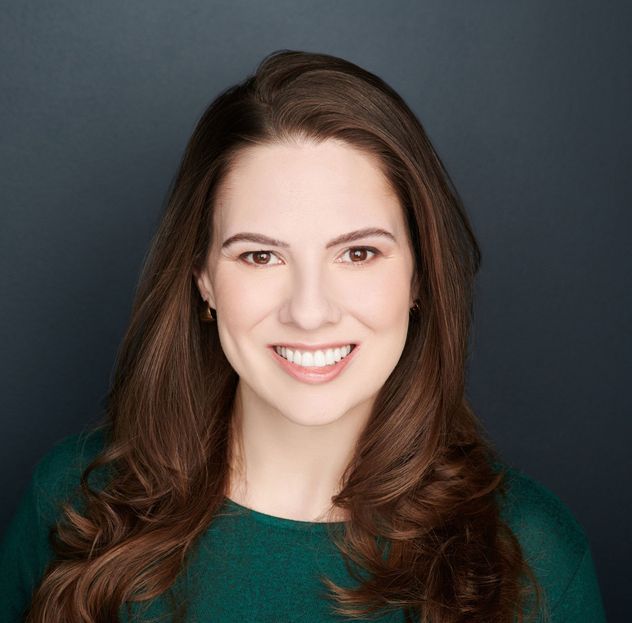
Dr. Dana Harron:
Self-care is not selfish. Self-care is not self-indulgent. Self-care is a mandate when anyone in your family system is dealing with any issue. Your partner's eating disorder affects you, of course, and also your wellbeing deeply affects your partner. It's not a separate issue.
Ellie Pike:
Today's episode is for anyone who has ever loved someone with an eating disorder and found themselves asking things like, "What in the world am I supposed to do? How do I support them but not control them? Is there even room for me inside a relationship where food, bodies, and fear take up so much space?" Our expert guide in this tricky terrain is Dr. Dana Harron, a psychologist based in Washington, DC. She's the author of the amazing book, Loving Someone With An Eating Disorder, as well as the upcoming Parenting Beyond Trauma. I personally have recommended her book numerous times and couldn't be happier to host her on the show.
Her expertise began by observing an unmet need. After years of working alongside couples impacted by eating disorders, Dr. Harron noticed a missing link in family support. While there's a lot of guidance for parents and adult caregivers of children struggling with eating disorders, partners and spouses are often left to figure things out alone. In this conversation, we'll talk about the unique challenges partners face, sharing meals, navigating intimacy, parenting together, and walking the line between care and control. We'll unpack what doesn't help, even when it comes from love and why self-care for partners isn't selfish. It's essential. You're listening to Mental Note Podcast. I'm Ellie Pike.
So, Dana, I'm so excited to jump in to all of the questions that I have really about your expertise, but also some of the tidbits from this book that might be helpful to our listeners. I think it would be really helpful to define terms because it's really difficult when we talk about a partnership, who are we talking about? So can you explain to us who you might be speaking about in this podcast?
Dr. Dana Harron:
Absolutely. I think I'll echo what I do in the book. The loved one can be the person with the eating disorder and I'll try to remind people of that as we go, and you as the partner is you as the partner of a person who has an eating disorder. It's true that it's possible that both members of a couple have disordered eating and in those cases, you can just assume that both apply to you.
Ellie Pike:
So why did you decide to write this book?
Dr. Dana Harron:
Well, actually there was... I think you mentioned there's a lot of literature out there for parents who are dealing with a child who has an eating disorder. But I always say if you treat your partner like you would treat a child, you're setting up for trouble. And also there are important issues that aren't addressed that are unique to a couple, like dealing with sex and intimacy, parenting issues, sharing a kitchen as peers, as adults. And I was getting calls from people. Some people say that if I wasn't a therapist, I'd be a librarian. I was getting calls. I always want to recommend a book and I was getting spouses and partners calling in and saying, "I'm not ready to do therapy myself," although it is something I recommend.
These people were not ready and they just wanted a person in my life, my heart and soul is dealing with this difficult issue, "How can I help?" And I didn't really have a good resource to give them. So I tucked the idea away for a little while and then when I ended up in a more informal conversation with an acquisitions editor at New Harbinger, I brought it back up and things sort of went from there. I'm so glad that it's out in the world and people do seem to be finding it to be helpful.
Ellie Pike:
Well, I know we're going to dig into some of the pieces here in this conversation and then I'm going to still encourage people to tap into actually reading your book. But one of the things you really broach is the basic relationship dynamics that are in a partnership with someone who has an eating disorder. So one of the things you mentioned is sex and intimacy, or sharing a kitchen. Can you speak to some of these other dynamics as well, like parenting or two adults being autonomous, but one kind of needing to be cared for maybe in a different way than the other?
Dr. Dana Harron:
Absolutely. In truth, there are as many configurations of relationship dynamics as there are relationships, but there are some themes that keep coming up again and again. I see a good amount of couples where both partners are struggling with some issue. One partner has their eating disorder, the other may have a substance use issue, maybe dealing with trauma fallout, possibly both members of the couple are dealing with trauma fallout and are coping in different ways, or the same way. So that is relatively common where there's a sense that the eating disorder plays some important function in the relationship. It keeps us from looking at something or dealing with something.
I also tend to see partners who have trouble titrating how much responsibility and how much control is appropriate to have in a situation like that. Because the situation is one that pulls for you to panic and get desperate and take over, and people try to do that and then actually that sometimes can anchor in eating behaviors more so. Another thing that I see sometimes is a partner that drifts away. Sometimes the partner with an eating disorder is so consumed by that and the loved one who is watching it happen finds it to be so difficult, that it's difficult to remain emotionally connected. So in those cases, I help people to get back in touch with what's going on.
Ellie Pike:
One thing that comes to mind is in your book, I like this diagram that you draw. It's just a cyclical picture, and I'm going to say what they are real quick because I can picture how that plays out and the dynamics you just mentioned. So your partner uses an eating disorder behavior, and then your anxiety goes up, and then you use strategies that might be unhelpful. So then your partner's anxiety goes up again, which might feed into the eating disorder behaviors. And so that picture makes sense. What are those unhelpful strategies that I might use, for example, if my loved one had an eating disorder? I might withdraw or I might over control, and so it could look really different in all of those dynamics. But overarchingly that would be the picture where we can't not affect each other.
Dr. Dana Harron:
Of course it's all one system, right? If you think of the couple as sort of a unit, if something's happening in one part of the system, it affects all the parts of the system. So the first thing is just let's normalize that it is absolutely okay to be deeply affected by your partner having an eating disorder and that people are not necessarily educated. There's a lot of the things that common sense would tell you are really helpful for an eating disorder actually turn out not to be. And so having that information can really help. A lot of times your anxiety leads you to try to do a sort of a failing strategy and then, yes, your partner's anxiety goes up, they might end up more likely to engage in an eating behavior.
At the same time, that doesn't mean that you're responsible for that happening. What your realm of control is is really you. So there are ways that people enter into the conversation that don't tend to help. A lot of times people panic and want to take everything over; people who are used to having a lot of control in their lives, people who don't feel fully comfortable when they're not in control, and people who have had lots of experiences of successfully addressing problems in that way. There are lots and lots of problems that you just fix, and an eating disorder is not like that. So when you take the set of skills that you might have in the boardroom or with your kids or with a friend group that you are sort of a leader of, if you take those skills and try to apply them towards an eating disorder, you'll be destined for failure.
At the same time, there are some strategies that don't really tend to work when dealing with disordered eating, taking over too much control and autonomy. Yes, you could probably come up with a very balanced breakfast for somebody, but it takes away their ability to learn how to construct their own breakfast. So it can be a difficult dance, but helping somebody and supporting somebody while not taking over their job is generally the place where you want to stay.
So partners will often tend to lump broadly into two categories, which are people that feel overresponsible and over involved in a loved one's disordered eating and maybe take over more than they should, maybe have trouble maintaining their own boundaries, end up driving three towns over to get the most special granola bar, things like that happen. And then there's also partners who don't understand the weight and the seriousness of what's going on, who might make light or say things that minimize your anxiety in the moment, but actually really don't strike a good chord like, "Oh gee, I wish I could have a restriction or anorexia, then I'd lose five pounds in time for some something."
And also one of the things that partners often do not realize can affect somebody with an eating disorder deeply is body comments of any type. Often I work with partners of people with eating disorders who think that if they compliment their partner's body or if they make their loved one feel beautiful enough or handsome enough that this eating disorder will go away and the answer is, no, it's not about that. And in fact, helping somebody to have less emphasis on their outward appearance can be really useful. So bringing up the other things that you connect with deeply about them, their intelligence, their humor, their warmth, that can be really healing for disordered eating if it's genuine and doesn't interfere with your self-care to do so. It's a wonderful thing to do, to compliment, but body-based compliments are not as helpful.
Ellie Pike:
You know, I like that you brought that up because I was going to ask you to clarify your earlier statement about sometimes when we're loving someone with an eating disorder, we think common sense applies but it doesn't. And that's a perfect example of it's actually not helpful to say, "But you look beautiful. You look so handsome." Or maybe it's not helpful to be like, "Wow, I really noticed you didn't eat that meal today. What's going on?" That's maybe not helpful, but there could be an alternative way of, "Hey, I was starting to notice X, Y, and Z. If you're struggling, I really would love to be here for you." Right? Just creating a supportive trusting experience versus feeling like the bad cop or being portrayed as the bad cop.
Dr. Dana Harron:
Absolutely. Food policing, it seems like it would help and sometimes it does help in the short run, but in the long run it erodes the relationship, because that's not your role as a partner or spouse. It's not your role to determine what somebody should or should not be eating. It's your role to support them in their recovery as it is defined by them. I do think that it is okay to notice things and it is okay to speak to what you notice, but the vibe, the vibe really matters, right?
There's a big difference between squinty eyes and, "I noticed you didn't eat a second egg at breakfast," and like, "When are you going to eat that egg?" And, "That egg's still on the table, you ought to go get it." And then you have a big row about the egg. There's a big difference between that and in a quiet and calm moment, maybe at a time that you've discussed in advance that you will check in about disordered eating. At a moment like that, you might want to say something like, "I noticed you didn't eat a second at breakfast. Is there anything you need from me? Is there anything that I can do to help you out?"
That's a really different connotation than food policing, I'm going to monitor every bite you do or do not take. You're allowed to notice things, you are a person with eyes and ears, and you're allowed to speak to your experience. And, at the same time, your role is to be a supportive and helpful presence, which I have to say can be very, very difficult. I'm saying all of these things like they're really easy. Of course you want to police food, of course you want to take over, of course you want to maybe check out and just go to work 80 hours a week, because this is really hard. It's really difficult for your loved one to deal with and it's really difficult for you to deal with. So it makes sense that you would end up with these strategies even though they don't tend to work in the long run.
Ellie Pike:
You know, I really appreciate you talking through these pieces and I think we could stay on this track of really talking about some of those practical ways to really support the loved on with the eating disorder. And I know the passion that you have behind self-care for the partner, the partner who is supporting. And so I would love to know how you define what self-care is and maybe some misperceptions around self-care and then we'll dive in there.
Dr. Dana Harron:
This is one of my favorite questions. So I actually put the self-care chapter as the second chapter of the book because it's that important. I constantly, time and time again, see partners trying to grapple with their loved one's disordered eating and forgetting to take care of themselves in the process. But remember how it's one system. So what affects one partner affects the other one, and that holds true both ways.
Your partner's eating disorder affects you of course and also your wellbeing deeply affects your partner. So going three towns over for a special granola bar, if it's within your boundaries and you're able to listen to your emotions about it, wonderful. But for many people it's not and they quietly build resentment over things like that and they are tired and overwhelmed and just a mess, right? You can become a mess.
So taking care of yourself is a way to take care of the couple and to take care of your partner. It's not a separate issue. And many people think about self-care as a thing you do once a month or so where you have a big day and you go to get a massage or you hang out with the guys or you do bubble baths and things like that, and that's great. I'm for that. I'm certainly for that. But also where self-care really lives is in your moment to moment experience. Taking a deep breath resets the entire nervous system, a slow deep breath. It's my number one thing that I encourage people to do when they are working with... It seems like it has nothing to do with eating disorders, but it really helps.
A lot of people also don't realize that there are many elements of self-care and many aspects of self-care. Emotional self-care, minding how you feel and listening to those body sensations that tell you when you're angry or stressed or tired, taking care of the environment around you, making sure that when a light bulb burns out, you replace it, and also minding your boundaries, not extending yourself beyond what you truly feel okay doing. Those are all aspects and elements of self-care. Self-care is not selfish. Self-care is not self-indulgent. Self-care is a mandate when anyone in your family system is dealing with any issue.
Ellie Pike:
It is so interesting because I can see how hard that can be, even that, "I need to eat a meal. I need to make sure that I'm taking a moment to go on that walk or take some deep breaths alone in a room," especially with a crowded house or a chaotic household, right? What are your thoughts on that metaphor about putting your oxygen mask on before somebody else's?
Dr. Dana Harron:
It's a trope for a reason, right? There's a reason you hear that everywhere, because it's true, because you will just be... When the plane's going down and the oxygen masks drop, if you don't give yourself oxygen, you're just passed out. You're not helping anybody else, you're just flopped down. And the oxygen in this metaphor I think for partners is often support outside the partnership.
This is one thing I talk about, because many people with disordered eating feel shame and fear about changing and lots of other things that make it difficult for them to grapple with, "My partner needs to discuss this with people." So support outside of the relationship, sometimes that can look like seeing a therapist and often that's a really good course of action, but it can also be friends or family that are able to provide a good support.
Ellie Pike:
While you're saying that, I'm like, "This is a great time to just plug the Eating Recovery Center does offer free caregiver support groups, especially for those who are supporting someone who is an adult." And that's an important piece because I think that that's kind of hard to find out there in the world. So I'll link to that in the show notes.
But back to self-care, I really like how you're explaining self-care is so essential, because it really does elevate the whole system. And so there's the other person and the relationship, then there's the system and then there's yourself. And so just being really mindful that the one thing that we can control is self-care for ourselves and that is mind-blowing for some folks where it's like, "Well, that's not the most important thing. I need to do X, Y, and Z for this other person." And, you are doing X, Y, and Z for the other person if you're taking care of yourself. So I would love to talk through some of the basic communication tips that might be helpful for partners.
Because, as you mentioned, it's like walking on eggshells sometimes when working with the eating disorder and it can be really tricky to know what to say and what not to say or how to understand your loved one in the mix of this disorder. So I'd love to talk about how to really relate, build the relationship and navigate some of those interesting dynamics.
Dr. Dana Harron:
I often say that the most important part of communication is listening and this part gets missed. And also, you have to create a certain space in order for that to happen. Of course, I really love it when couples come in for couple therapy, right? Then that can be mediated and there can be another presence available. Double bonus points is therapist who's really skilled at eating disorders as well.
But just creating a space can do wonders. I encourage couples to try to, whether or not they're in therapy, meet on their own and have a designated time that's, "Let's talk about how things are going with food." And in those conversations, ideally the loved one who's struggling with an eating disorder is talking at least as much as their partner. And it's okay to ask questions about what would be helpful. It's okay to ask at a meal... Now these conversations are not happening at the table. Having a conversation about food at the table with somebody who has an eating disorder will always fail.
But in these meetings, it's helpful to have conversations about, "What really helps you out? Is it helpful if I play hangman with you while you eat a difficult meal? Is a distraction really helpful? Do you need more time alone or more time with your friends, more time with me?" All those questions and all the questions that you ask yourself when you're developing your own self-care are questions that you can generally put to your partner. So I find that to be really valuable.
Now, not every partner is in the space where they are aware yet of what they need, or perhaps aware that they need support and help. And so let me move to communication about what you have noticed or experienced. I find it to be very helpful when people define for themselves inside their own minds before they enter into these conversations. Am I speaking only for myself? What is something I can say that is true for me and not a, "You ought to do this. I wish you would do that." And sometimes those things get a little disguised. Sometimes people say, "Well, I feel like you should be eating differently." That is not a feeling, friends, that is a command.
So it's sort of another trope for a reason is the I statement. I don't know if everybody's familiar with this, but you statements sound like, "You need to eat differently. You need to stop your problematic exercise. You need to change how you're doing things." I statements are about you and your own experience. "I'm worried about you. I'm worried about you and I love you. I feel scared sometimes. I feel scared." And it's okay to feel angry, and also I think the first best place to bring your anger is towards your outside supports, right? To talk with your therapist and talk with your friends and family about, "Also it makes me feel angry." It's normal and natural to feel angry at somebody who is hurting someone you love. That makes sense. And in this case, the person who's hurting the person you love is them.
So we often do find that partners have some anger, and also leading with that will almost definitely escalate the conversation to a fight. So my key points, I guess, are don't talk about food things when you're at a meal. Try to find a calm, quiet time when you're both feeling pretty okay and feeling connected to talk. Have it be an ongoing conversation if possible and speak for yourself.
Ellie Pike:
I really love all these. And the one thing that I want to add, so you can tell me if I'm right to add this or not, but validation. The example I'm thinking of is when the loved on is like, "Yeah, but I'm trying so hard and this is horrible and I'm scared too." Taking a moment, that partner taking a moment to say, "I believe you. This is really hard." And really validating... "Because you're trying something new that you've never tried before and you're breaking all these patterns, and because it is really hard when people are watching you eat and X, Y, and Z."
And then they could still go on to, "How can I support you in that?" Or, "What can we do different this week together where we're supporting each other?" But that validation piece, I just see that all the time start to shift those dynamics. When someone can start to feel understood or believed, they can soften into that supportive relationship.
Dr. Dana Harron:
I couldn't agree more. And also I would like to layer onto that, that you can validate from an authentic and genuine place when you are able to, as much as possible because this isn't your experience, to try to understand, to try to get a sense of what somebody's disordered eating might feel like for them. It is important to keep in mind that people do not wake up in the morning and say, "You know what? An eating disorder sounds really, really awesome and fun. I'm going to just go ahead and do that."
Now it can look that way on the outside, which is hard, right? It can seem, because it's a behavior, it can seem like people are choosing it, but they in fact are not. And in fact, we find that a lot of what goes on often has to do with genetics, that the story's been written before this person entered the scene. In the listening phase of your conversations, asking your partner what it's like for them and understanding that having an eating disorder is not a choice. Telling somebody with disordered eating to just eat differently is like telling an insomniac to just go to sleep. It doesn't land and it doesn't make sense.
And a part of the eating disorder is that the eating disorder skews things. It skews reality a bit. People begin to feel as if how they eat and how their body is is a... People begin to feel like their worth is about what they're eating and what their body is like. People begin to feel like it's dangerous to eat differently. And when I say that, I mean in every sense. People go into fight or flight reactions. It is high anxiety, because the eating disorder has made that feel real. And unfortunately eating disorders have a way of cementing in.
Sometimes I think of them as like a parasite, and they sustain themselves somewhat by starving the brain of the nutrients that it needs in order to think clearly and think well and it can become so loud. It really feels like you're doing something wrong and bad and every fiber in your being is telling you not to when you try to fight against your eating disorder. So understanding that baseline and then also understanding the unique aspects of your partner's experience by asking them and listening and open a way as you can muster, which will in turn be fostered by your excellent self-care, can be really great to do.
Ellie Pike:
So what you just described to me is perspective taking, right?
Dr. Dana Harron:
Mm-hmm.
Ellie Pike:
And if I'm the partner and I'm taking the perspective of what you just explained, an example of how I could validate or understand to the best of my ability might be, "Gosh, that sounds really hard to wake up every morning and feel like you're fighting your brain and this thing that feels like it's maybe taken over you that's telling you to do the opposite of what you know might be the right thing to do all day long. That sounds really hard."
Dr. Dana Harron:
Yeah.
Ellie Pike:
And so even though I might not get it right, I'm trying to get it right, right? And then it allows room for that other person to be like, "Yeah," or, "No, this is more like what it is."
Dr. Dana Harron:
It's not quite like that and it's okay to be corrected. And it's maybe important to be corrected, because we can't know 100% of someone else's experience no matter how well we know them.
Ellie Pike:
And maybe that's exactly it, right? It's okay to know you're not going to get it right and to say, "Hey, I might not have gotten that right. Would you like to help me understand?"
Dr. Dana Harron:
Yeah, leaving the flexibility to be corrected or... I tend to work with partners to try to use a lot of open-ended questions so that there's a little more space, but sometimes that can also feel really overwhelming. So it's okay to hazard a guess, but I would lead with, "This might be totally wrong." But it's also you're going to get it wrong. You're going to get this wrong, you're going to get communicating it all wrong. It's all about the journey and the growth.
So leading with, "This might be wrong," understanding that you don't really know and that it can change from day to day and there can be different aspects of the experience leaves you open. And just acknowledging that having an eating disorder is really, really hard can go a really long way.
Ellie Pike:
Thank you for all of this. This is just really helpful in regard to creating space that's not at the dinner table or the breakfast table or wherever it might be to have hard conversations. And I would like to add out of that, if there are times where you want to bring something up and it's not a decided upon time, it might really be helpful to say, "May I bring something up to you right now? Would this be a good time? Are you open to having a conversation right now?" And then it gives them the autonomy to say like, "Nope," or, "Let's schedule a time," and so that they're not bombarded or feeling overwhelmed.
Dr. Dana Harron:
Right now I can hear a lot of my partners saying, "But they never want to have a conversation. They'll just always say no." And in those cases, I just want to speak to those cases, it's okay to take a step back and say, "I can be a supportive presence when and if you're ready. I'd like to talk about this. I'm open to talking about this," and get your support outside of the relationship and just be patient. It's really, really hard. People tend to sort of future cast based on what's happening now. Just because your partner, your loved one with an eating disorder may not be ready to talk right now doesn't mean that they never will be.
Ellie Pike:
And that takes a lot of patience. That sounds like a really helpless feeling for the partner.
Dr. Dana Harron:
Yeah. Yeah, absolutely. It can be.
Ellie Pike:
So I'm trying to picture all the different dynamics, which there are a million of them in partnerships, but I'm thinking of the partners where both might be dealing with a mental health issue. Maybe they're not both eating disorders, but both dealing with a mental health issue. And do you have any tips around offering helpful support to each other? So if one person is engrossed in an eating disorder and they may or may not be seeking recovery, and this other person is dealing with depression but also needs support from their partner, that can get really complicated. And you might just say, "Go to therapy," and that's a great answer.
Dr. Dana Harron:
If it's approachable for you, which it isn't for everybody, if you have all of the internal and external resources to do that, yes, absolutely. I see that a lot. And actually I think there's something about people who have been wounded in a certain way are attracted towards one another. Because everybody wants to be with somebody where they have a chance at being understood, so people who are struggling often end up connecting with other people who are struggling and that can be a really, really difficult space to navigate.
I do think that it gives you a leg up in terms of perspective taking, because nobody decides to be depressed or whatever it is that a partner might be dealing with, the same way nobody decides to have an eating disorder. And I do think time together matters, time together where you're not addressing these issues and time together where you are, if it's possible. It's okay if it's not. I like to add yet onto the end of every sentence, it's okay if it's not right now that you're going to sit down and have a conversation.
And there's a space for acknowledging what's going on, we're each struggling, and finding the spaces where you can be a really helpful support to each other. There's usually something if you get creative. I also recommend not making it a bargain. It's not going to be, "I'll heal from my substance use if you heal from your eating disorder," or, "You heal from your eating disorder, if I heal from my substance use," because the process just doesn't work that way. And I'm sure everybody would want to just wave a magic wand and have all the issues we're dealing with just go away, right? So that sort of bargaining, it feels like it would be helpful, right?
"We're going to strike a bargain. We both want to be healthier. You're going to do this and I'm going to do that." But then that can end up with a lot of guilt, a lot of resentment and sometimes secrecy. I've had loved ones with eating disorders say, "I don't want to share how much I'm struggling with my partner because they're going to feel like that's a green flag for them to go drink, or gamble, or sink into a depression," whatever it is that they're dealing with, or maybe also eat in a disordered way. So the bargaining doesn't work. I'm sorry. I wish it did, but it does not.
Ellie Pike:
I wish it did too. This podcast would be a lot faster. Instead, we know it's so complicated and that's what we're here just to, I think, shed light on that folks are not alone. Right?
Dr. Dana Harron:
Mm-hmm.
Ellie Pike:
It can feel really isolating because every situation is so complicated, where if I'm a partner in a relationship with somebody who has an eating disorder, it's like, "Who can relate to that?" Right?
Dr. Dana Harron:
Mm-hmm.
Ellie Pike:
And there are folks who can relate and there are resources out there and we're here to offer that hope. So boiling this down to a very, very overly simplified dichotomy, there might be a couple kinds of folks with an eating disorder. So if I were to do far ends of a spectrum, let's say, one person who's motivated towards recovery, and those who are not and want to stay or are unwilling to leave the eating disorder. So can we talk through some ways that a partner might actually approach their loved one wherever they are?
And I think of it as like a seesaw or a spectrum, obviously it's not always both far ends of the spectrum. But I think that the way that we would approach both of those ins might be really different, right? One person is working or wants to recover and one person is maybe complacent and not ready or maybe doesn't even want to talk about it or admit that they have an eating disorder. So, Dr. Harron, how would you coach someone to encourage someone maybe to that higher level of care who's not ready for recovery or even to consider the concept of recovery? Maybe it's not even finding treatment yet.
Dr. Dana Harron:
I always wish that I had a better answer for this. I've looked at it every way and I really think that it's true that there's no great amazing answer that preserves your relationship and your and your loved one's autonomy, and also motivates somebody who may not be ready into a higher level of care, like a residential place where you stay, or into even talking about an eating disorder.
I do also believe that it's often true that people take things in without necessarily being obvious about it. I think that the space for you to share that you're concerned exists, and I think that it matters. And of course you can only speak to your experience, you can speak to your concerns and your fears and that's really what's in your zone of influence. There's your zone of control, which is you and your self-care and your boundaries. There's your zone of influence, which is you expressing to your loved one some of the things that you've noticed that might feel like a concern and some of the worries that you may have about their health and their wellbeing, but you cannot make them go into a higher level of care, you cannot make them go into treatment. And that's really hard for people to grapple with.
I don't even like saying it. I want to have a formula. I do find that ironically that if you can get in the space in between... So people will go two ways with this, right? "I never bring up the eating disorder because it's going to result in a fight and I don't want to deal," or, "I harp on it 24/7." And I think if you can find the space where you are clear about your concerns, you're clear about your stance and you also understand that you're not ultimately in control of what kind of treatment, if any, somebody gets that's not you. If you can hold both of those things, that's actually where I see people more likely to get the care that they need because they're feeling steadier and more secure and they're not feeling controlled.
A lot of times people react to feeling controlled by digging in. So if there's a lot of, "You must this and you must that," it feels like you're addressing it, but the truth is often if there's too much of it that it can be closer to anchoring it in. But looking the other way and pretending not to notice and pretending everything's fine is also not a winning strategy. So it is a delicate balance, but I think that if you think about what is the middle way, that is most likely to get folks into treatment and to get folks the help they need.
Ellie Pike:
I know that's a really hard one to say out loud, and it is the reality of someone being over the age of 18 where they have to choose treatment and help for themselves and it's just the natural dynamics of a partnership where you can't do it all for somebody else. And so navigating that, I really appreciate how you talked about the spheres of influence and sphere of control. Is that how you mentioned it?
Dr. Dana Harron:
Yeah. Yeah.
Ellie Pike:
Those are my take homes. I really appreciate those pieces. So what about the partner who is supporting someone who is motivated toward recovery and potentially has the nourishment in their brain, because we know that's a really key piece of all of this, to actually make sound decisions? How can they be of a positive support?
Dr. Dana Harron:
If your partner is invested in their own recovery, they are the number one expert on their recovery. So developing those listening skills and making space to be a supportive and calm presence, you don't really have to do much else besides just be there. If you are there and you are centered and grounded, then you've provided a centered and grounded presence for your partner and humans are social animals. So when we are around somebody else who's feeling okay enough, we get less anxious.
Also, in a food moment, if a loved one is struggling to have a particular food or to get through a moment, hopefully you have some idea what might be useful because you've already asked them sometime when you weren't at the table, but a couple of tips and tricks are that it's typically not about the food. It may not be about the food, it may be about the feelings, but it also really may be about the food. Some foods are more challenging than others for people depending on what their inner list of what's okay and not okay looks like.
Reminding them of your presence and availability is really helpful. Sometimes that looks like you just reach across the table and you put your hand on theirs. Sometimes that looks like, "Do you want me to help distract you?" Distraction can be very helpful when people are having difficult food moments. It can also look like, "Let's revisit this and maybe Monday morning quarterback, what we might have done differently at some future point when anxiety is less."
Ellie Pike:
I like what you mentioned about being calm and being that steady presence. And one thing that we say oftentimes with caregivers is, "Do your own work and do your own education so that you can also be confident." Confident and calm really can be that anchor, like you talked about. And so I really appreciate all of this conversation. Obviously there's so much more that we could touch on and I'm just going to leave that as a teaser for folks to get your book, or at least come to a support group or start looking into those resources for themselves.
But I am wondering if you have any closing thoughts, maybe the one takeaway you hope someone really gets from this episode or just a word of encouragement?
Dr. Dana Harron:
I think the one takeaway would be taking really truly good continuous care of yourself will open up the space for you to understand where your partner is and to meet them there and help them walk along in a supportive adult to adult relating type of way that ultimately can be healing for everybody.
Ellie Pike:
Well, we're so grateful to have you on the show, Dr. Harron. You added such life to this topic and clarity in so many ways and so thank you so, so much.
Dr. Dana Harron:
I'm so grateful to be here. Thank you so much for having me on.
Ellie Pike:
As we wrap up today, I keep coming back to something Dr. Harron said, that supporting someone with an eating disorder isn't about finding the perfect thing to say or doing everything right. It's about showing up as a regulated, grounded partner again and again. You can't force recovery. You can't out logic an eating disorder, but you can care for yourself, set boundaries, listen deeply, and offer steady adult to adult support that leaves room for autonomy, dignity, and real connection.
If this episode resonated with you, Dr. Harron's book, Loving Someone With An Eating Disorder, is a powerful resource and so is the weekly caregiver support group held by Eating Recovery Center. We'll link to both, as well as additional caregiver supports in the show notes. Thank you for listening to Mental Note Podcast. Our show is brought to you by Eating Recovery Center and Pathlight Mood & Anxiety Center. If you'd like to talk to a trained therapist to see if in person virtual treatment or a relapse prevention program is right for you, please call them at 877-850-7199.
If you need a free support group, check out eatingrecovery.com/support-groups or pathlightbh.com/support-groups. Also, could you do us a quick favor? Leave a glowing review for us on iTunes, Spotify, or wherever you're listening. Also sign up for our e-newsletter and learn more about the people we interview at mentalnotepodcast.com. Doing these things helps our show grow and we are so grateful for your effort. Mental Note is produced and hosted by me, Ellie Pike, edited by Carrie Daniels and directed by Sam Pike. Till next time.